Ссылка на исходный проект: https://portfolio.hse.ru/Project/304641
Бренд духов, создающий ароматы по мотивам алкогольных коктейлей.
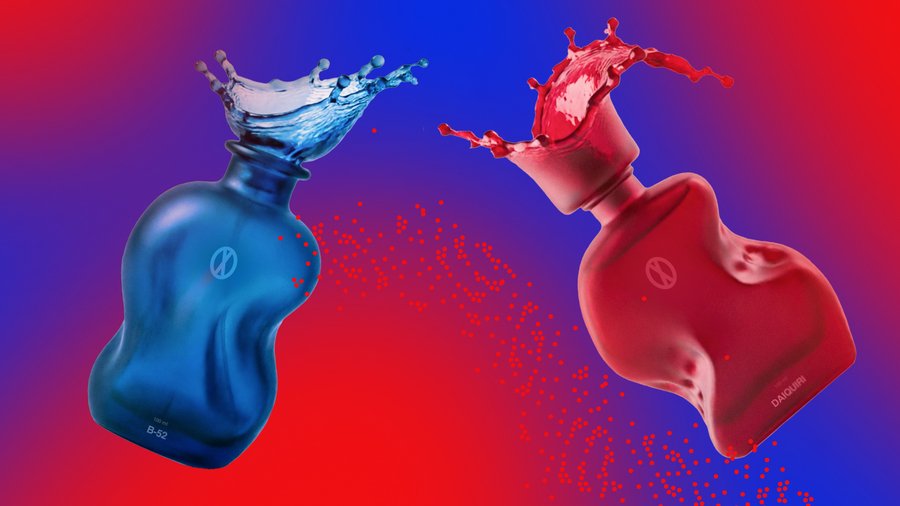
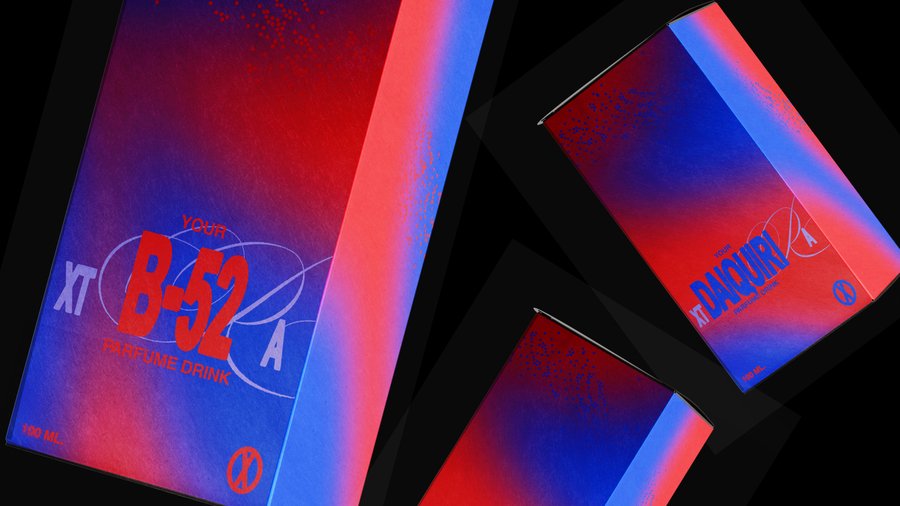
Старый дизайн продукта
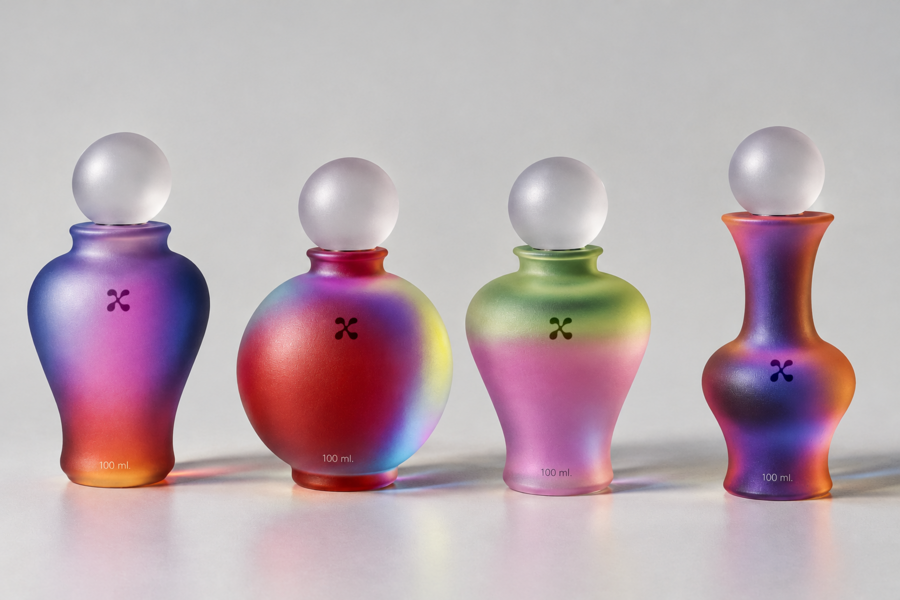
Новый дизайн продукта
промпт: Imagine you are a top-tier product designer. I am developing the brand identity for a perfume line called «Xtra,» where each fragrance is inspired by alcoholic cocktails. I have attached a reference image showing 9 different shapes; please create four separate images, each featuring one perfume bottle. Each bottle should mirror one of the shapes from the reference, while maintaining the original color palette and the graphic elements shown on the bottles. The bottles should be crafted from matte glass, and each should be topped with an identical, minimalist, spherical cap made of translucent matte glass. Include the small inscription «100 ml.» on each bottle. The final output should consist of realistic, sharp, and clear photographs, featuring soft shadows, cool-toned lighting, and a light-colored background.
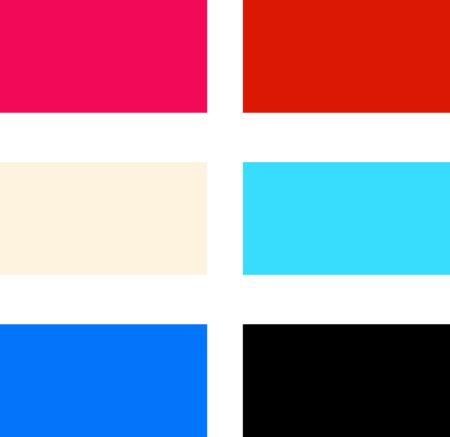

лого и цветовая гамма
промпт для лого:Create a distinctive custom wordmark logo featuring the exact lowercase letter «x», inspired by psychedelic 1960s–1970s typography, retro beauty packaging, and experimental graphic design. The letterform is extremely fluid, organic, and irregular, with thick, rounded strokes, exaggerated curves, and unconventional proportions. Its two intersecting strokes merge into a continuous, soft, almost liquid silhouette, resembling hand-drawn lettering molded from a single piece of material. The shape feels playful, expressive, bold, and slightly surreal, with smooth bulbous terminals and subtly asymmetrical contours. Use a solid, uniform black fill with crisp, clean edges and no outlines, gradients, shadows, or textures. Center the letter on a pure white background with generous negative space. Minimalist vector logo, high contrast, flat 2D design, precise silhouette, strong visual identity, suitable for a contemporary niche perfume brand with a retro psychedelic aesthetic.Negative prompt: thin strokes, sharp geometric edges, serif typography, conventional fonts, perfectly symmetrical shapes, additional letters, extra symbols, decorative elements, gradients, 3D effects, shadows, textures, mockups, watermark.
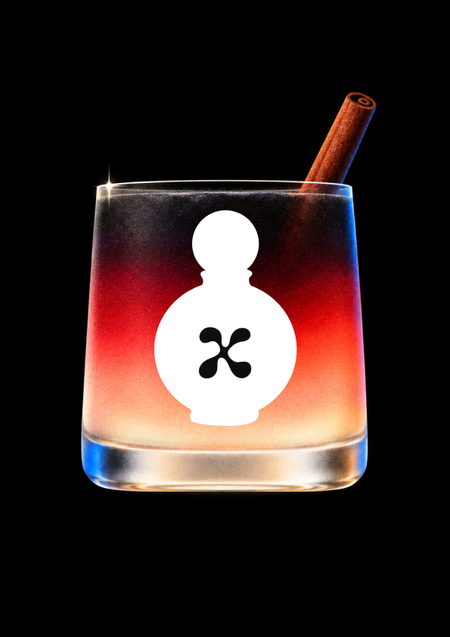
кейвизуалы: градиентные коктейли с шумом, векторная форма с флаконом, градиенты, наложение градиента на коктейли, режим маска
Промпты для градиентных коктейлей:
Create a high-end 3D cocktail product illustration in a distinctive retro-futuristic graphic style, combining minimalist luxury advertising, experimental digital art, and vintage print aesthetics.Subject: A single classic short tumbler glass filled with a layered cocktail, positioned centrally against a completely pure black background. The glass has a wide, slightly tapered cylindrical silhouette, with subtly slanted sides, rounded lower corners, and a thick, softly illuminated rectangular base. Its shape is simple, architectural, and sculptural, with a perfectly horizontal, thin, luminous rim.Cocktail colors: The drink features a striking vertical gradient, transitioning from near-black charcoal at the top through deep burgundy and saturated blood red in the middle, into warm coral, pale peach, and luminous creamy ivory at the bottom. The gradient blends softly into one another, creating a surreal glowing effect. The cocktail appears slightly translucent, with a fine, grainy, stippled surface texture resembling vintage film grain, risograph printing, and analog photographic noise.Garnish: A single cinnamon stick rises diagonally from the upper-right side of the glass, partially submerged in the cocktail. It has a minimal elongated cylindrical form, rich burnt-orange and dark reddish-brown tones, a softly curled tip, and a subtly rough, powdery texture. Add a tiny, delicate four-point star-shaped glint near the upper-left edge of the rim, suggesting a sparkling glass reflection.Lighting and materials: Dramatic, controlled studio lighting with luminous cream-white highlights along the rim and base. Introduce subtle electric-blue reflections on the right side of the rim and the left side of the glass base. The glass should have a frosted, translucent quality rather than conventional photorealistic transparency. Use soft internal glow, restrained bloom, deep shadows, and delicate color bleeding between materials. The entire image should have a fine, evenly distributed grain that adds tactile depth without obscuring the silhouette.
Composition: Straight-on frontal view, centered and symmetrical, with the glass occupying approximately the central 50% of the square canvas. Leave extensive negative space above,
Create a sophisticated 3D cocktail illustration in a minimalist retro-futuristic graphic style, blending luxury editorial design, experimental digital art, and vintage analog film aesthetics.Subject: A single elegant coupe cocktail glass, centered against a completely pure black background. The glass has an extremely wide, shallow, horizontally elongated bowl with softly rounded ends, a delicate narrow stem, and a thin, flat, elongated oval foot. Its silhouette is refined, geometric, and almost impossibly slender, inspired by mid-century modern glassware and futuristic sculptural design.Glass material: The glass is almost invisible, defined by delicate luminous outlines and subtle translucent reflections rather than solid white surfaces. The rim is a perfectly straight, razor-thin horizontal line glowing in a gradient of cool white, pale pink, lavender, and electric violet. The bowl has a soft smoky transparency, with a fine gradient transitioning from charcoal black at the top to muted dusty mauve and pale champagne near the bottom. Its lower edge emits a faint warm ivory glow. The long, impossibly thin stem is outlined with a delicate pale pink-white highlight, connecting seamlessly to a minimal horizontal foot illuminated with a gradient of lavender, pink, and warm white.Cocktail: The liquid is dark, nearly black burgundy with subtle smoky purple undertones, gradually fading into a soft, pale champagne glow near the bottom of the bowl. Its surface is smooth and glassy, with delicate internal reflections and a fine, evenly distributed grain resembling vintage photographic noise, analog film, and experimental screen printing. Avoid obvious liquid splashes or realistic ice.Garnish: A single small, vivid crimson-red cocktail cherry rests near the right side of the rim, partially emerging above the glass. The cherry is rendered as a simple, softly glowing red sphere with subtle pink highlights and a diffused halo. A thin, elegant, curved green stem extends upward and slightly to the right, forming a graceful organic line against the black background. The garnish should remain minimal and graphic, serving as the only saturated accent color.
Signature details: Add two tiny, delicate, four-point star-shaped light flares: one near the left edge of the bowl’s rim and another near the right side of the glass foot. The flares are subtle, smoky, and translucent, suggesting delicate reflections from a photographic flash rather than decorative stars.Composition: Perfectly centered, straight-on frontal view, symmetrical glass silhouette, with the bowl positioned in the upper third and the long stem extending vertically toward the lower third. The entire glass, foot, and garnish must remain visible. Generous negative space surrounds the object, occupying approximately 75–80% of the pure black canvas. Maintain precise alignment, balanced proportions, and a clean, isolated silhouette.Lighting and rendering: Extremely restrained studio lighting, luminous edge highlights, soft atmospheric bloom, subtle chromatic reflections, delicate translucency, gentle gradients, and barely visible shadows. Use fine analog film grain across the glass and liquid to create a tactile, slightly imperfect texture. The result should feel like a fusion of high-end 3D CGI, airbrushed 1970s editorial artwork, minimalist perfume advertising, and futuristic cocktail photography.Color palette: Absolute black, smoky charcoal, muted burgundy, dusty mauve, pale champagne, warm ivory, luminous white, pastel pink, lavender, and a single vivid cherry-red accent.Background: Completely solid black (#000000), seamless and distraction-free, without a horizon, surface, scenery, or environmental reflections.Technical specifications: Square 1:1 aspect ratio, ultra-high resolution, crisp silhouette, elegant proportions, refined gradients, subtle grain, restrained glow, premium editorial art direction.Negative prompt: No text, no typography, no logo, no watermark, no additional glasses, no extra garnishes, no straws, no hands, no tabletop, no excessive reflections, no thick glass walls, no exaggerated 3D realism, no colorful background, no unnecessary decorative elements.
Prompt:Create a high-end 3D cocktail illustration in a minimalist retro-futuristic graphic style, combining experimental digital art, luxury beverage advertising, and vintage analog film aesthetics.Subject: A single short, wide whiskey tumbler glass, isolated and floating against a completely pure black background. The glass has a broad, slightly tapered cylindrical silhouette, with subtly angled side walls, a perfectly horizontal flat rim, softly rounded lower corners, and a thick, luminous base. Its proportions are geometric and architectural, with a clean, almost vector-like silhouette.Cocktail and color gradient: The glass is filled with a visually striking cocktail featuring a dramatic vertical color transition. The uppermost layer is deep charcoal black, fading into dark burgundy and smoky wine red, followed by a saturated neon raspberry-pink and vivid hot magenta center. The lower portion transitions through soft coral pink, pale peach, warm champagne, and luminous creamy ivory. The colors blend smoothly into one another, creating an atmospheric, airbrushed gradient with a subtle internal glow. The bottom of the glass appears almost white, as though illuminated from within.Ice cubes: Add two large, irregularly shaped ice cubes partially submerged near the upper surface of the cocktail. Their silhouettes are softly blurred and frosted, with pale pink-white highlights, translucent edges, and subtle reflections. The ice should merge gently with the surrounding liquid, appearing as abstract luminous shapes rather than sharply defined, photorealistic cubes.Glass material: The tumbler is made of subtly translucent glass, with extremely thin, understated side edges and a bright, clean white horizontal rim. Its contours are defined by delicate gray reflections and subtle gradients rather than heavy outlines. The thick bottom creates a broad, glowing white band with softly rounded corners, emphasizing the sculptural shape.
Texture and visual treatment: Apply a fine, evenly distributed layer of film grain and tiny speckled noise across the glass and liquid. The texture should resemble vintage 35 mm film, analog screen printing, and softly grainy airbrush illustration. The surface is slightly hazy and tactile, with atmospheric color bleeding and soft transitions. Avoid excessive sharpness or overly realistic liquid details.Lighting: Dramatic frontal studio lighting, a luminous white rim, soft internal illumination, subtle bloom, deep black shadows, and restrained reflections. Add a small, delicate four-point star-shaped glint just above the upper-right rim. The glint should be thin, smoky, and understated, like a reflection from a studio light.Composition: Perfectly centered, straight-on frontal view. The tumbler occupies approximately 40–45% of the square canvas height, leaving generous negative space on all sides. The complete glass is visible without cropping. The composition is simple, balanced, graphic, and editorial, with no visible tabletop or surrounding environment.Color palette: Absolute black, charcoal, deep burgundy, wine red, vivid raspberry, hot pink, coral, pale peach, champagne, and glowing ivory white.Art direction: Retro-futuristic 3D CGI, 1970s editorial graphics, experimental luxury cocktail photography, minimalist product visualization, soft airbrushed gradients, analog film grain, luminous color blocking, and sophisticated underground magazine aesthetics.Background: Pure solid black (#000000), completely seamless, with no scenery, no horizon, no surface, and no additional objects.Technical specifications: Square 1:1 aspect ratio, ultra-high resolution, clean geometric silhouette, subtle translucency, smooth gradients, fine grain, high contrast, controlled glow, premium commercial art direction.Negative prompt: No text, no typography, no logos, no labels, no watermark, no hands, no straws, no fruit garnishes, no extra glasses, no splashes, no excessive bubbles, no colorful background, no tabletop, no harsh outlines, no overly realistic ice, and no unnecessary decorative elements.
Prompt:Create a high-end 3D cocktail illustration in a minimalist retro-futuristic style, combining experimental digital art, futuristic luxury branding, and vintage analog film aesthetics.Subject: A single elegant martini glass, isolated and floating against a completely pure black background. The glass features an extremely wide, shallow, inverted-cone-shaped bowl with a perfectly straight horizontal rim, a sharply tapered lower point, an impossibly thin elongated stem, and a narrow, flat horizontal foot. The silhouette is geometric, delicate, and architectural, resembling a futuristic sculptural object. The glass is transparent and almost invisible, defined by subtle luminous edges and delicate reflections.Cocktail and color palette: The drink glows with an extraordinary gradient of deep black, dark teal, emerald green, vivid turquoise, and luminous electric cyan. The upper portion of the bowl is nearly black with subtle smoky green undertones, gradually transitioning into rich emerald in the center and an intensely glowing turquoise-cyan near the bottom point. The colors blend seamlessly, creating an atmospheric, almost bioluminescent effect. The liquid appears translucent, with soft internal illumination and a slightly hazy, grainy surface.Glass material and reflections: The rim is a thin, perfectly straight luminous line transitioning from pale mint green on the left through icy cyan and vivid cobalt blue on the right. The bowl has barely visible translucent side edges with subtle smoky reflections. The stem glows in a gradient of pale cyan, mint, and luminous white, becoming brighter near the bowl and foot. The flat base features a thin horizontal line of electric blue, turquoise, mint green, and white, with a delicate chromatic glow.Garnish: A single green cocktail olive sits near the right side of the rim, partially submerged in the drink. It has a softly rounded silhouette, muted lime-green and olive-green tones, a subtle yellow-green highlight, and a fine grainy texture matching the overall image. A very thin, elegant silver cocktail pick pierces the olive diagonally, extending upward toward the right at a sharp angle. The pick is metallic, minimal, and sharply illuminated, with a delicate white highlight.
Signature light effects: Add two subtle four-point star-shaped reflections: one near the left end of the glass rim and another near the right side of the base. These flares are thin, elongated, and smoky, resembling delicate photographic light streaks rather than decorative stars.Lighting and rendering: Minimalist studio lighting, luminous edge highlights, soft internal glow, subtle bloom, controlled chromatic reflections, delicate transparency, and deep black shadows. Apply fine analog film grain and tiny speckled noise throughout the liquid and glass, creating a tactile, slightly imperfect texture reminiscent of 35 mm film, vintage airbrush illustration, and experimental screen printing. The glow should feel sophisticated and restrained, never overly neon or cartoonish.Composition: Perfectly centered, straight-on frontal view. The glass occupies approximately 70% of the canvas height, with the wide bowl in the upper third and the long, slender stem extending vertically toward the lower third. Preserve generous negative space on every side. The entire glass, including the garnish, stem, and base, must be fully visible without cropping. The composition should feel balanced, weightless, elegant, and editorial.Background: Pure solid black (#000000), seamless and completely distraction-free, with no horizon, no visible surface, no environment, and no additional objects.Art direction: Retro-futuristic 3D CGI, 1970s editorial graphics, minimalist cocktail advertising, experimental luxury product photography, luminous gradients, analog film grain, sculptural glassware, and sophisticated underground magazine aesthetics.Technical specifications: Square 1:1 aspect ratio, ultra-high resolution, crisp geometric silhouette, realistic translucency, smooth gradients, fine grain, restrained glow, high contrast, and premium commercial art direction.Negative prompt: No text, no typography, no logos, no labels, no watermark, no additional glasses, no extra garnishes, no fruit slices, no straws, no hands, no tabletop, no visible environment, no splashes, no exaggerated reflections, no thick glass walls, no overly realistic photographic background, and no unnecessary decorative elements.
PROMPT — XTRA COCKTAIL COLLECTION / LUXURY EDITORIAL COMPOSITIONCreate a high-end, photorealistic product campaign for Xtra, an experimental fragrance and cocktail-inspired brand. Use the first reference photograph as the exact guide for composition, object placement, camera angle, lighting, shadows, and atmosphere. Use the three supplied cocktail illustrations as the exact visual references for the products.COMPOSITION AND ARRANGEMENTRecreate the sophisticated triangular arrangement of three cocktail objects from the first reference image. Place all three supplied illustrations together in a single vertical editorial still life, arranged at different heights and depths on a dark tabletop.— Left: The first cocktail illustration stands in the background, positioned slightly left of center. Preserve its exact glass silhouette, liquid colors, gradient, garnish, and distinctive details.
— Right: The second cocktail illustration stands in the background, positioned slightly right of center. Preserve its original proportions, glass shape, vibrant color transitions, ice, and decorative elements.
— Front center: The third cocktail illustration is positioned in the foreground, lower than the other two, becoming the main focal point. Maintain its exact original silhouette, color palette, garnish, and glass details.Create a balanced, sculptural composition with subtle asymmetry. The two rear objects should feel slightly farther away, while the front object appears closer to the camera. Maintain clear visual separation between all three silhouettes. Their bases should rest naturally on the same tabletop, with realistic perspective and believable proportions.STRICT ILLUSTRATION PRESERVATIONTreat the three supplied illustrations as finished product designs, not as inspiration for redesign. Preserve each object’s exact glass geometry, silhouette, proportions, liquid level, gradient colors, garnish, ice shapes, straws, decorative elements, and material characteristics. Do not simplify, reinterpret, merge, or exchange details between the illustrations. Do not invent additional objects or alter their distinctive shapes. Integrate them naturally into one coherent photographic scene.
LIGHTING AND ATMOSPHEREUse a completely black, seamless background with deep, rich shadows and no visible horizon. A single warm, focused spotlight illuminates the tabletop from the upper left, creating a soft golden pool of light beneath the objects. Add subtle directional highlights along the glass edges, realistic refraction through the colored liquids, delicate specular reflections, and soft colored light spilling onto the surface beneath each glass.The transparent glass should exhibit physically accurate reflections, thin luminous rims, natural optical distortion, realistic liquid density, and subtle condensation. The colorful drinks should glow from within without appearing artificial or neon. Preserve rich, saturated colors while allowing the darkest portions of the scene to fade naturally into black.Cast elongated, soft-edged shadows diagonally across the tabletop, matching the direction and mood of the original reference photograph. Include faint reflections beneath the glasses, with restrained cyan, magenta, and warm amber color spill corresponding to the individual cocktails.SURFACE AND CAMERAThe tabletop is a dark, subtly textured wooden surface with a low-gloss finish, transitioning from warm illuminated brown in the center to almost black at the edges. Shoot from a slightly elevated, frontal viewpoint, capturing the full height of the glassware and its contact with the surface. Use a portrait-oriented composition, with generous negative space above the objects and around the silhouettes.Simulate professional luxury beverage advertising photography, a full-frame camera, a 70–85 mm lens, carefully controlled depth of field, razor-sharp glass edges, detailed liquid textures, and realistic optical highlights. Keep all three objects sufficiently sharp to appreciate their designs.ART DIRECTIONThe aesthetic is dark, cinematic, experimental, and sophisticated, combining luxury spirits advertising, contemporary perfume campaigns, and surreal editorial still-life photography. The final image should feel like an exclusive campaign for Xtra’s cocktail-inspired collection: bold, sensual, glossy, visually striking, and meticulously art-directed.
OUTPUT: One cohesive, photorealistic vertical image featuring all three supplied cocktail illustrations in the composition of the first reference photograph. No text, no typography, no logos, no labels, no extra glasses, no hands, no people, no additional props, and no changes to the original illustration designs.
Градиенты сделаны по градиентам с коктейлей «make a gradient from this photo», векторные флаконы обведены с фото флаконов с фотографии выше
сгенерированный шрифт/ подобранный
промпт: Create a custom bold display font inspired by the reference image. The typography should feature ultra-heavy, chunky, rounded letterforms with thick, soft, inflated strokes and smooth, curved edges. Use a playful, compact, slightly irregular sans-serif style with tightly packed letters, minimal spacing, and a strong, cohesive silhouette. The lowercase characters should feel organic and almost blob-like, with rounded terminals, distinctive shapes, and a bold, youthful streetwear aesthetic. Keep the letters solid black on a pure white background, with no outlines, shadows, gradients, textures, or decorative elements. Preserve the short, wide proportions and dense visual weight of the reference. The result should look like a custom hand-crafted logo font: simple, striking, modern, and instantly recognizable. Typography only, clean vector-like rendering, high contrast, centered composition.
Носители и мерч:
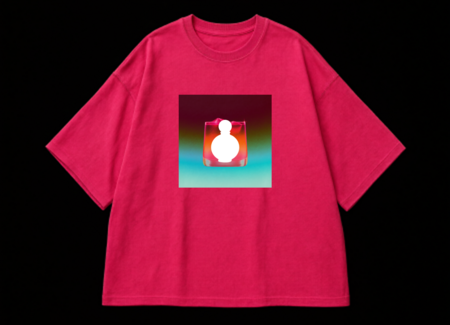
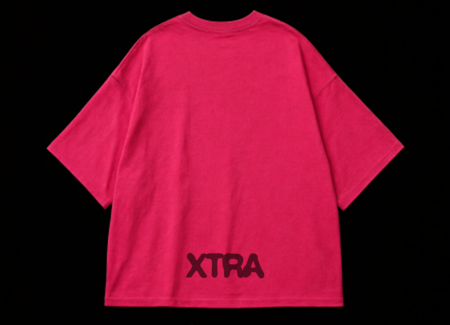
Create a clean, minimalist studio product photograph featuring two identical oversized, blank T-shirts arranged vertically, one above the other, on a solid-color background.T-shirt details:
— Exact T-shirt color: vibrant pink-red #F20A59.
— Classic crew neckline with a ribbed collar.
— Oversized, relaxed fit with wide, dropped shoulders.
— Short, broad sleeves with a slightly angled silhouette.
— Straight, boxy body with a flat hem.
— Plain, unbranded fabric with no graphics, logos, text, pockets, or visible tags.
— Soft, heavyweight cotton jersey texture with subtle natural fabric folds.Composition and layout:
— Show the back view of the T-shirt on top and the front view on the bottom.
— Both shirts are centered horizontally and aligned symmetrically.
— Maintain generous, equal spacing between the two shirts.
— Display each shirt fully, with the sleeves and hem completely visible.
— Use a straight-on, flat product photography angle with no perspective distortion.
— Both shirts should have approximately the same size, shape, and proportions.Background and lighting:
— Flat, evenly distributed studio lighting.
— Soft, subtle shadows around the garment edges for realistic separation from the background.
— Sharp, clean outlines and accurate color reproduction.
— High contrast between the pink-red shirts and the blue background.Style: Premium e-commerce apparel product photography, minimalist catalog aesthetic, photorealistic, crisp details, balanced negative space, professional studio quality.Aspect ratio: Vertical 2:3 composition.Important: Preserve the simple two-shirt layout of the reference image. No models, hangers, props, extra objects, decorative elements, gradients, watermarks, or text.
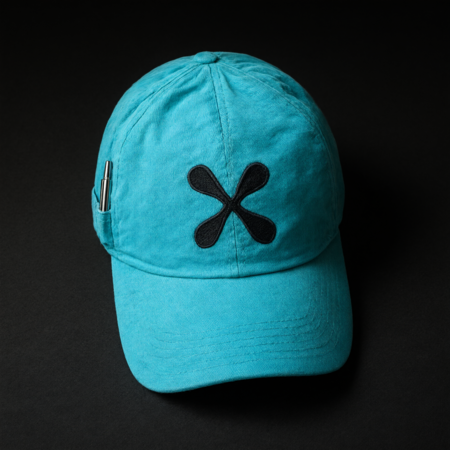
Create a photorealistic, editorial-style product photograph using the first reference image as the composition and lighting reference, and the second reference image as the exact graphic to be embroidered on the cap.Main subject: A classic baseball cap made entirely of #38DCFC fabric, with realistic cotton twill texture, visible stitching, natural wrinkles, a curved brim, and subtle fabric folds. The cap should look slightly worn and naturally shaped, photographed from above at a three-quarter angle, filling most of the frame.Graphic placement: Place the exact black abstract symbol from the second reference image on the front panel of the cap. The symbol should be reproduced faithfully, preserving its original silhouette, proportions, curves, and shape. Do not reinterpret, redesign, distort, or add any text to the symbol. Make it look like a professionally embroidered emblem, using subtle tonal embroidery or a slightly contrasting thread that remains visible against the black fabric. The graphic must follow the natural folds and curvature of the cap.Additional details: Include a slim silver or white pen tucked into the side pocket of the cap, similar to the first reference image. Keep the pen understated and realistic.Background and lighting: Place the cap on a nearly black, charcoal-textured surface. Use moody, low-key studio lighting with soft directional highlights that reveal the black fabric’s texture and stitching. Create deep shadows, subtle film grain, and a slightly vintage analog-photography aesthetic. Maintain a sophisticated, minimal, streetwear-inspired art direction.Composition: Vertical 4:5 portrait format. The cap is centered and occupies most of the image, with generous dark negative space around it. Keep the front emblem clearly visible and in sharp focus. Realistic perspective, natural shadows, high detail, premium fashion-campaign photography.
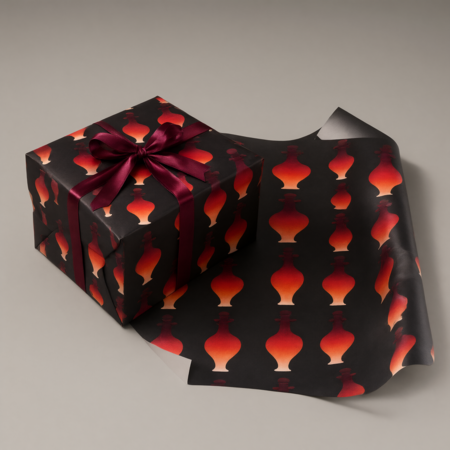
Create a premium, photorealistic product mockup of luxury gift wrapping paper using the exact uploaded pattern as the artwork reference. The pattern features repeating ornamental vase silhouettes in a vivid red-to-orange gradient fading into a warm peach-cream base, arranged in a clean, evenly spaced grid on a deep black background.Show a sheet or roll of wrapping paper elegantly wrapped around a rectangular gift box, with crisp folded edges, realistic creases, and a neatly tied complementary ribbon. Include a second sheet of the same wrapping paper partially unrolled beside the gift box to showcase the full repeating pattern.Pattern preservation is essential: reproduce the original vase silhouettes, colors, proportions, spacing, orientation, and black background faithfully. Do not redraw, distort, simplify, recolor, or add new elements to the pattern. Ensure the pattern repeats seamlessly across the wrapping paper, with consistent scale and alignment.Art direction: sophisticated contemporary packaging design, bold graphic contrast, minimalist luxury aesthetic, soft directional studio lighting, natural shadows, subtle paper texture, matte uncoated paper finish, premium editorial product photography.Composition: three-quarter overhead view, gift box as the main focal point, wrapping paper clearly visible across multiple surfaces, clean neutral studio setting, balanced negative space, high-end design portfolio presentation.Output: ultra-realistic, high-resolution mockup, professional commercial product photography, 4:5 portrait composition. No text, no logos, no watermarks, no extra decorative patterns. The final result should look like a real, professionally photographed gift-wrapping product while keeping the supplied artwork recognizable and intact.
Create a photorealistic studio product image of a custom keychain, combining the construction and design of the first reference photo with the exact silhouette and gradient colors of the second reference image.1. Keychain pendant shape<br>Use the exact outer silhouette from the reference image as the keychain pendant shape. Preserve its distinctive rounded top, narrow neck, curved shoulders, wider middle section, and tapered rounded bottom. Follow the original contour precisely. Do not replace it with a butterfly, flower, clover, or any other generic shape.2. Gradient color — preserve from the second reference<br>Reproduce the original gradient from the second reference image as closely as possible:— Deep dark burgundy-red at the very top.
— Rich crimson and vivid red through the upper and middle sections.
— Warm orange-red transitioning smoothly into soft peach and pale cream at the bottom.
— Keep the gradient vertical, smooth, seamless, and faithful to the original image.
— Preserve the exact color transitions, gradient direction, and overall color balance. Do not flatten the gradient or introduce additional colors.3. Keychain construction<br>Follow the physical construction of the first reference photo:— A polished silver metal oval carabiner clip at the top.
— A bright red woven cord attached through the metal clip.
— A compact, solid pendant featuring the exact custom silhouette from the second reference.
— The pendant hangs vertically from the cord, centered and aligned.
— Two long parallel red cord ends hang below the pendant, each finished with a small neat knot.
— Include realistic cord texture, natural tension, secure knots, and believable metal reflections.4. Exact lace color<br>Set the entire woven cord and all knots to the exact solid hex color #DA1803 (RGB 218, 24, 3). Keep the cord consistently this color along its full length. Do not apply the pendant’s gradient to the cord.