Content
Background
Chapter 1: Colonial Display
Chapter 1.1 Museum Architecture and Vitrine Design
Chapter 2: Apartheid Display
Chapter 3: The Transitional Period (late 1980s–1990s)
Chapter 4: Decolonization and Contemporary Curatorial Practice (2000s–Present)
Chapter 4.1: Feeling the Collection
Chapter 4.2: Digital display and use of technology
Conclusion
List of image sources and bibliography
Concept
This visual research explores how displays in national south African museums have changed from colonial to apartheid periods and up to the post-apartheid era. It argues that the way museums rearrange their exhibitions is the best window into a great narrative of the times. It shifted from the museum as a «cabinet of curiosities» that was basically a container for displaying the collection, a museum that did nothing but exhibiting, to displays that were actually telling a story, and later to the attempts of decolonizing the displays. These changes, in essence, are the national museums' journey as institutions in an ever-changing society. The central idea in this visual research is that a national museum is not a place where people go to just see things that are displayed. Rather, it is a place where ideas, including those that may lead to conflicts, can be articulated. Through this study of the museum, permanent/ temporary exhibits as well as curatorial materials have been considered. The focus has been made on the physical arrangement, material culture and storytelling to understand the ways in which historical world view is created and subsequently questioned. For instance, the early display of Europe-centered world view by the Iziko South African Museum resulted in identifying and labeling items as being the right way and the way of Europeans rather than trying to interpret them or even understand them completely.The famous «Bushman Diorama» is an example where the native people were frozen in time by the display as if they were in a museum case to a degree that they were presented as extinct. The power of the colonies was reinforced not only by the use of display but also, the representation itself as it was the colonized who were the subject of the display. Then, in popular galleries like the Whale well there was more a shift from mere categorizations of things towards the experiences/feelings of the visitors themselves. Post-apartheid, museums were supposed to be places where any and everyone would be made physically comfortable and where one could come up with the new nation identity.
The visual research material is chosen on the basis of reports from institutions, case studies and publications that discuss the history of museums in South Africa. The focus has been made on the physical arrangement, material culture and storytelling to understand the ways in which historical world view is created and subsequently questioned. For instance, the early display of Europe-centered world view by the Iziko South African Museum resulted in identifying and labeling items as being the right way and the way of Europeans rather than trying to interpret them or even understand them completely. The famous «Bushman Diorama» is an example where the native people were frozen in time by the display as if they were in a museum case to a degree that they were presented as extinct. The power of the colonies was reinforced not only by the use of display but also, the representation itself as it was the colonized who were the subject of the display. Then, in popular galleries like the Whale well there was more a shift from mere categorizations of things towards the experiences/feelings of the visitors themselves. Post-apartheid, museums were supposed to be places where any and everyone would be made physically comfortable and where one could come up with the new nation identity.However, most museums at that time were only superficially inclusive by adding stories of the historically marginalized communities while retaining the dominance of European narrative as the major content. At the National Gallery of South Africa, the 1996 exhibition called «Miscast» was an attempt at being more critical. Yet, it did emphasize a major issue that curators were having difficulties with when their desire for one thing and the expectations of the descendants they featured a person were so different, this difference made their collaboration challenging. All of the above examples show that the act of display reflects museum as a tool for maintaining one’s power and the site of resistance for changes.
This subject is of major interest, since the development of display in national museums of South Africa can be seen as a tangible archive indicating that a society is working through a violent past via the display of things and storytelling. Although «decolonizing the museum» has become a global slogan, the South African situation is very unique and mainly because of the effects of apartheid, nation-building, and the fight for representation. The study asks in what ways have exhibition display techniques, in national museums of South Africa, changed from the colonial period to the present? Display, it is argued in the text, has moved from one phase to another through overlapping periods, i.e., from classification and spectacle, to the phase of «adding on, inclusion», and to the most recent period of «critical re-narration and repair». By tracking this movement, the research demonstrates the shift of national museum display from the portrayal of power as natural to the demonstration of the mechanisms of power.
Background
The Iziko south African museums-Cape town, 2025 SA CityPass.
The history of museums in South Africa is so strongly political that it is impossible to imagine museums as neutral containers. When Iziko Museums were first opened in 1825, it was already very evident that the colonial attitude was adopted by the museum, the first exhibits resembled a " Wunderkammer " collection, where objects were arranged according to a «Eurocentric worldview that gives priority to Western knowledge systems over a cultural context of objects».
Humanity, an immersive experience on show at the Iziko South African Museum, N. Pamplin, 2023.
The Mammal Gallery, as the museum now calls that, is considered an artefact of a time when natural history was more about claiming and putting into order than about comprehending and being inclusive». Right from their start, the museums were not simply collecting and preserving, rather they were arranging the world and with that, they were putting people into order: a place for each, who is civilized, who is the one who will be put on display, and who is observing. It means that museums can be called sites of struggle where different versions of history, identity, and belonging are constantly trying to establish themselves. During the era of white rule, the struggle was clear: museums served as a reflection of those who were in power, their ideas of what a museum should be, and of how public commemorations and society operate. It came to show the ideology behind «white control» and «Afrikaner Nationalism».
The Bushman Diorama, (later referred to by the museum as the Karoo Diorama), 1960.
The most striking image of this ideology is the Bushman Diorama which was unveiled in 1960. In this diorama, the native people are cast in plaster, they are frozen in an idealized version of the pre-colonial time period where they are displayed as «primitive» people that are «fading away,» static, and without a change. The same display that the museum today calls «a legacy of a bygone era created to foster harmful stereotypes and justify colonial ideas» had been made with a clear intention. The dispute regarding the museum is the dispute about who the historical subject is and who the object of the display is.
Chapter 1: Colonial Display
The interior of ole worm’s museum in museum wormianum (1655)
Museums in general were places where there was not much story but rather, they were spaces reflecting the colonists' understanding of how knowledge operates. When the South African Museum was established in 1825, its task was quite defined, it was the place for «receiving and classifying the different objects belonging to Animal, Vegetable, and Mineral Kingdoms found in South Africa». Classification in the service of colonial administration through the agency of a museum whose primary focus was to make natural and human worlds of the colony understandable, orderly, possessable.
The frontispiece of Museum Wormianum shows fish, birds and a cub polar bear suspended from the ceiling of the museum that Worm built.
The museum presentation was a direct reflection of the European wunderkammer, a «cabinet of curiosities» that displayed rare and exotic natural history specimens as well as artifacts from far away lands according mainly to a «Eurocentric worldview» in which western knowledge systems were elevated, and the cultural backgrounds of the objects were considered as less important. The guiding visual strategy was based on the principle of collection and categorization: the main justification for objects in Europe was that they did not have any particular meaning for the people who created or used them but rather that they displayed how nature was structured and what part of the world was being collected by Europeans.
Man-made artefacts and art works displayed alongside natural history specimens, 2020.
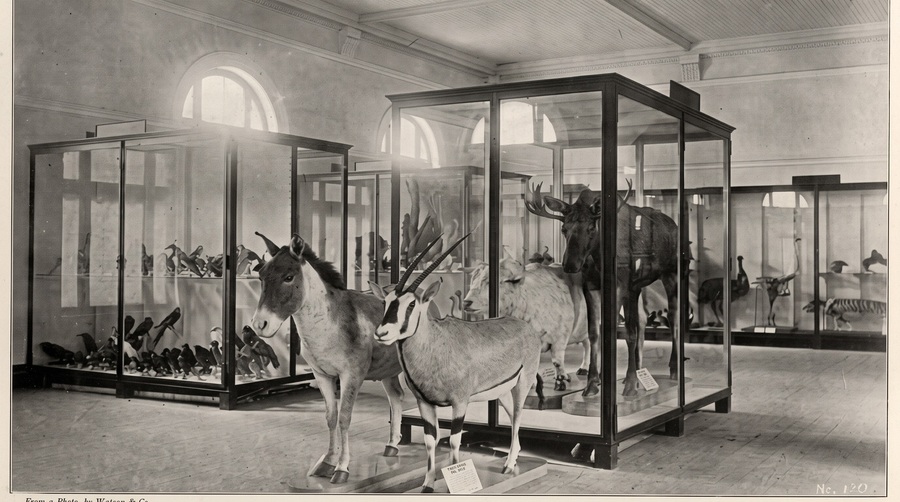
Demonstrations of colonial domination through the medium of visual display employed particular conventions, like tall display cases from floor to ceiling, tightly arranged collections, specimen names that did not explain, and no explanation texts that could link objects to specific cultural or historical context. The label plays a role of the key visual document at this point. A colonial label usually listed a scientific name, a geological origin, and perhaps a donor’s name.
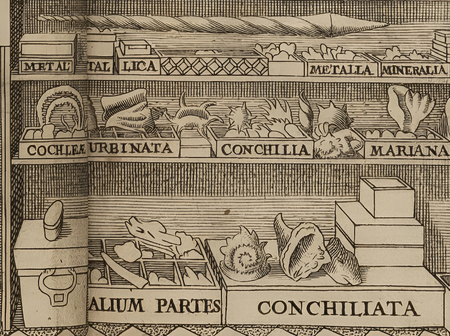
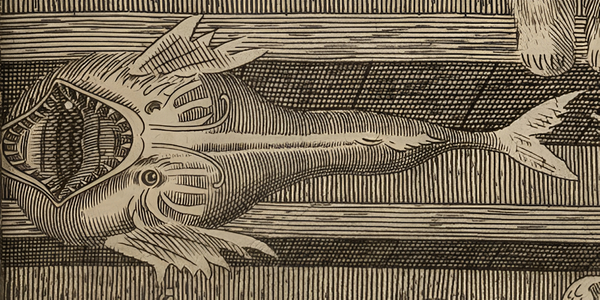
Labelled boxes of artefacts, the ‘unicorn’s horn’ (narwhal tusk) can be seen on the upper shelf. And the frontispiece of one of the fish specimens hanging from the ceiling.
This is what the art historian and museum scholar Tony Bennett would later describe as the «exhibitionary complex» in its most naked form: power exercised through the instruction of the visitor’s gaze, teaching citizens how to see the world as an ordered hierarchy of which they were the privileged observers.
Chapter 1.1
Museum Architecture and Vitrine Design
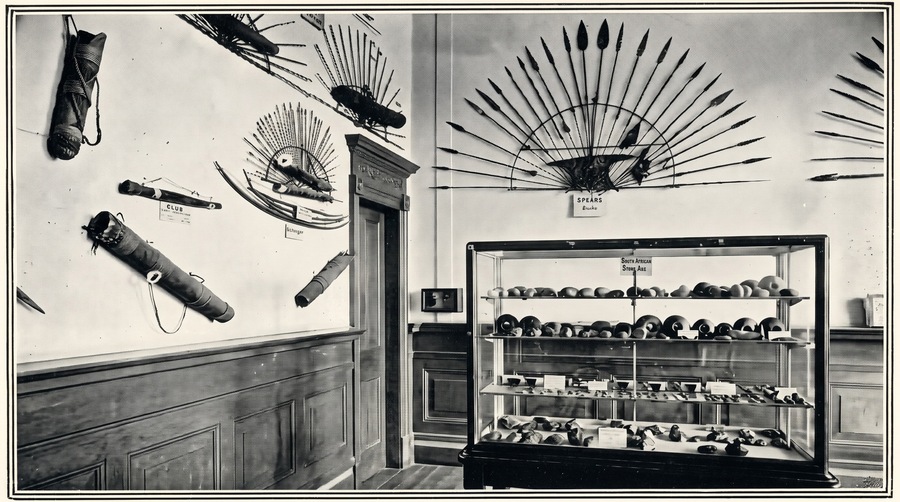
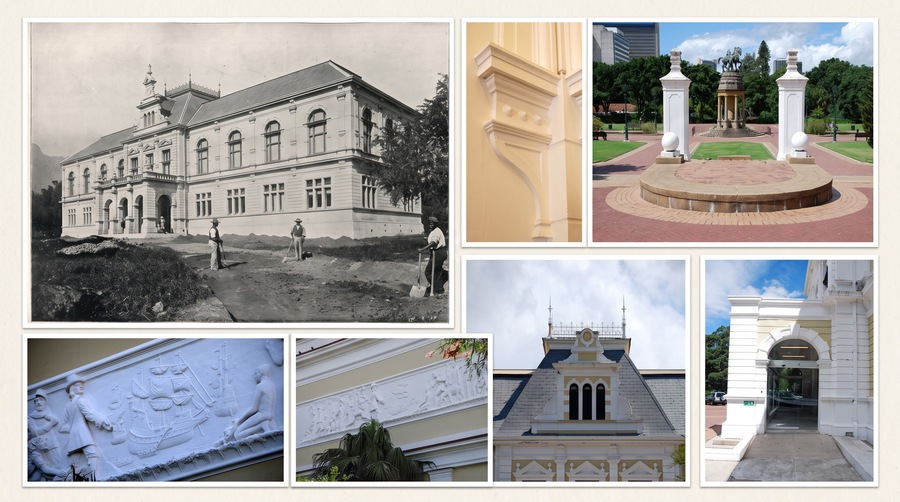
Architecture of the first Natural History Museum (1856) then South African Museum now the Iziko South African Museum. William Martinson.
.
The architecture of colonial South African museums often mimicked the European temple of power and unquestionable knowledge. For example, the South African Museum, built in 1897 at Cape Town’s Company’s Garden is characterized by its European-inspired architecture including its large columns, grand staircases and symmetrical layout. Its placement in a large, open public space was intended to evoke the power of colonial science to civilise, control and order the African landscape. By entering the museum, one entered an orderly and European controlled world, the opposite of the surrounding local environment.
Victorian-Style Museum Display Case at Iziko, 2026 — University of Cape Town.
Within the expansive galleries, the architectural design of the display enclosures, referred to as vitrines, functioned as a subtle mechanism of regulation. Constructed from robust mahogany wood accompanied by thick glass panels, these Victorian-era museum vitrines imposed a rigid physical division between the observer and the exhibited artifacts. Indigenous implements, beadwork, and cultural artifacts were securely enclosed behind glass, thereby devoid of their inherent sounds, scents, and tactile interactions. This arrangement established a unilateral dynamic wherein the visitor assumed the role of an external examiner of silent specimens, effectively transforming vibrant African cultural heritage into remote, static relics.
Chapter 2: Apartheid Display
This section focuses on a Bushman Diorama at the Iziko South African Museum.
Photograph of the bushman diorama taken in 1989.