Создание серии керамических фигурокинструментами ИИ
Концепция
В рамках финального проекта я разрабатываю серию фигурок, созданных на основе моих детских рисунков животных.

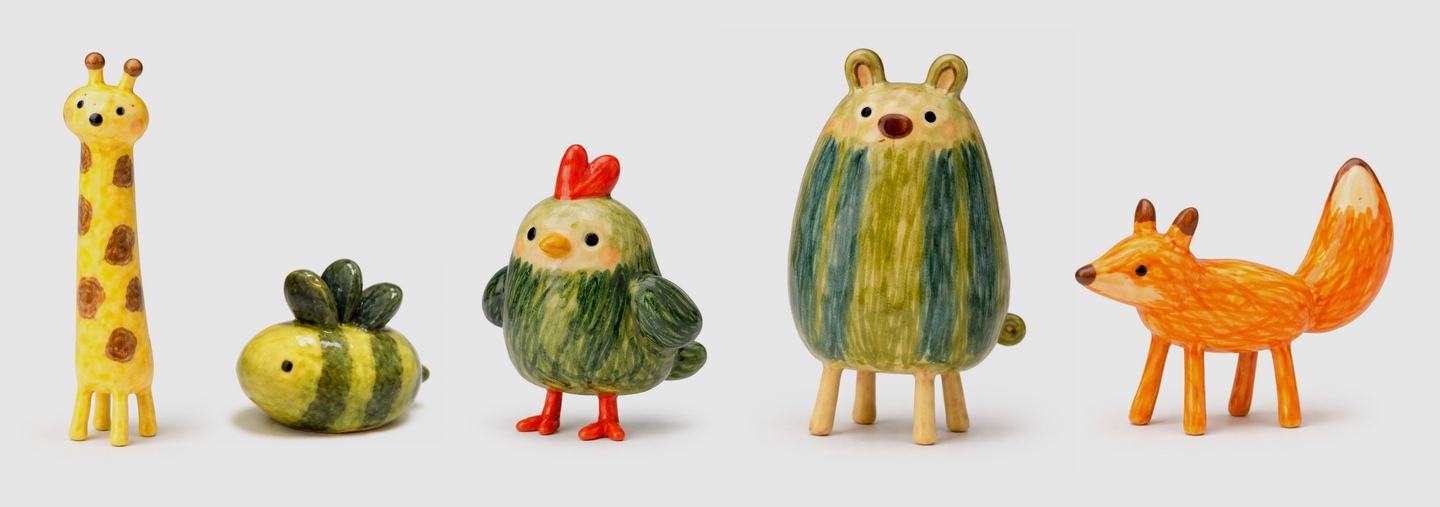
Серия 2D объектов
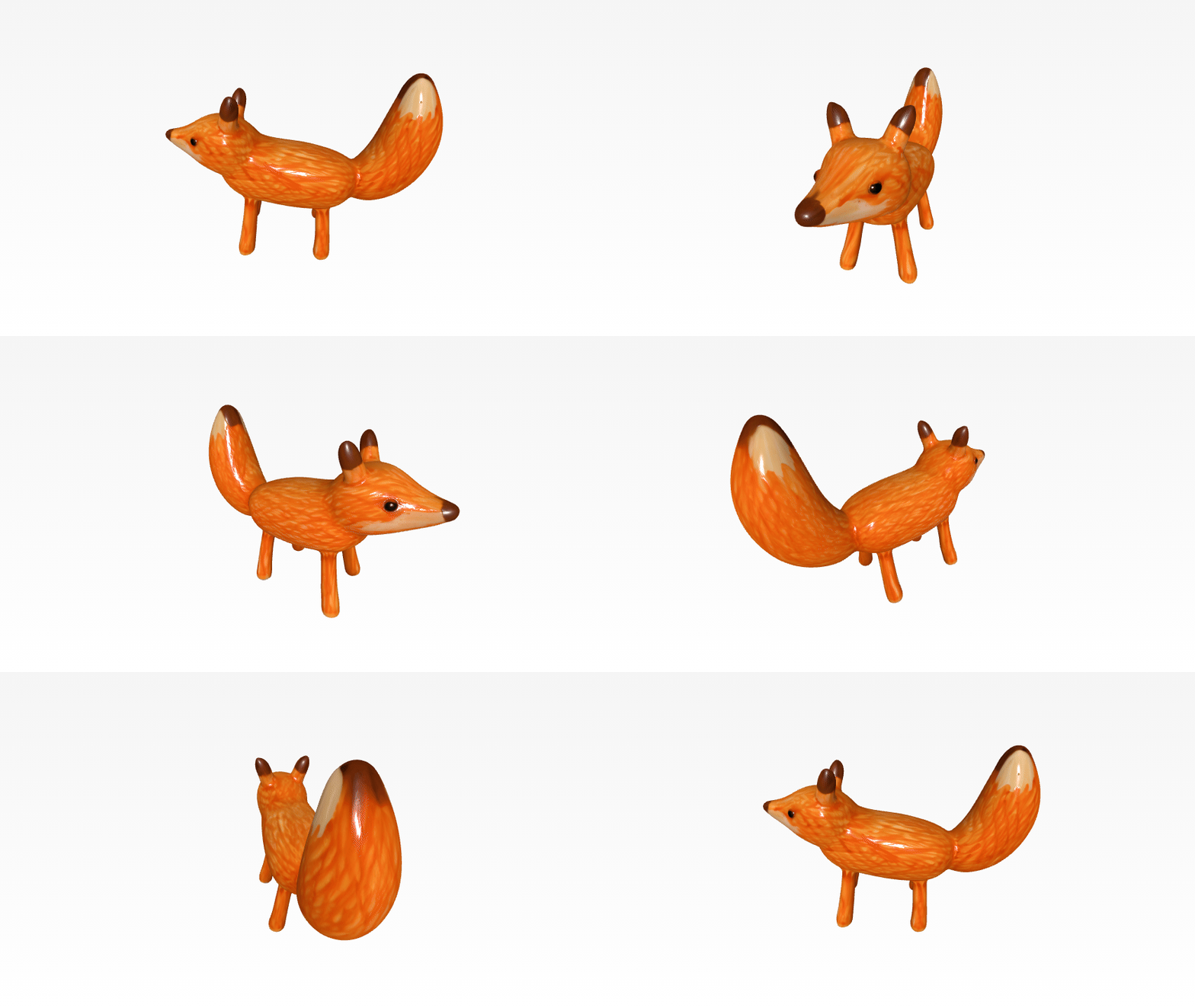
Я отсканировала и отредактировала свои детские рисунки и загрузила их в ChatGPT, чтобы он написал промты для создания фигурок на их основе. Далее, после создания 2D фигурок, с помощью Hunyuan 3D были созданы 3D модели.
Генерация 3D моделей
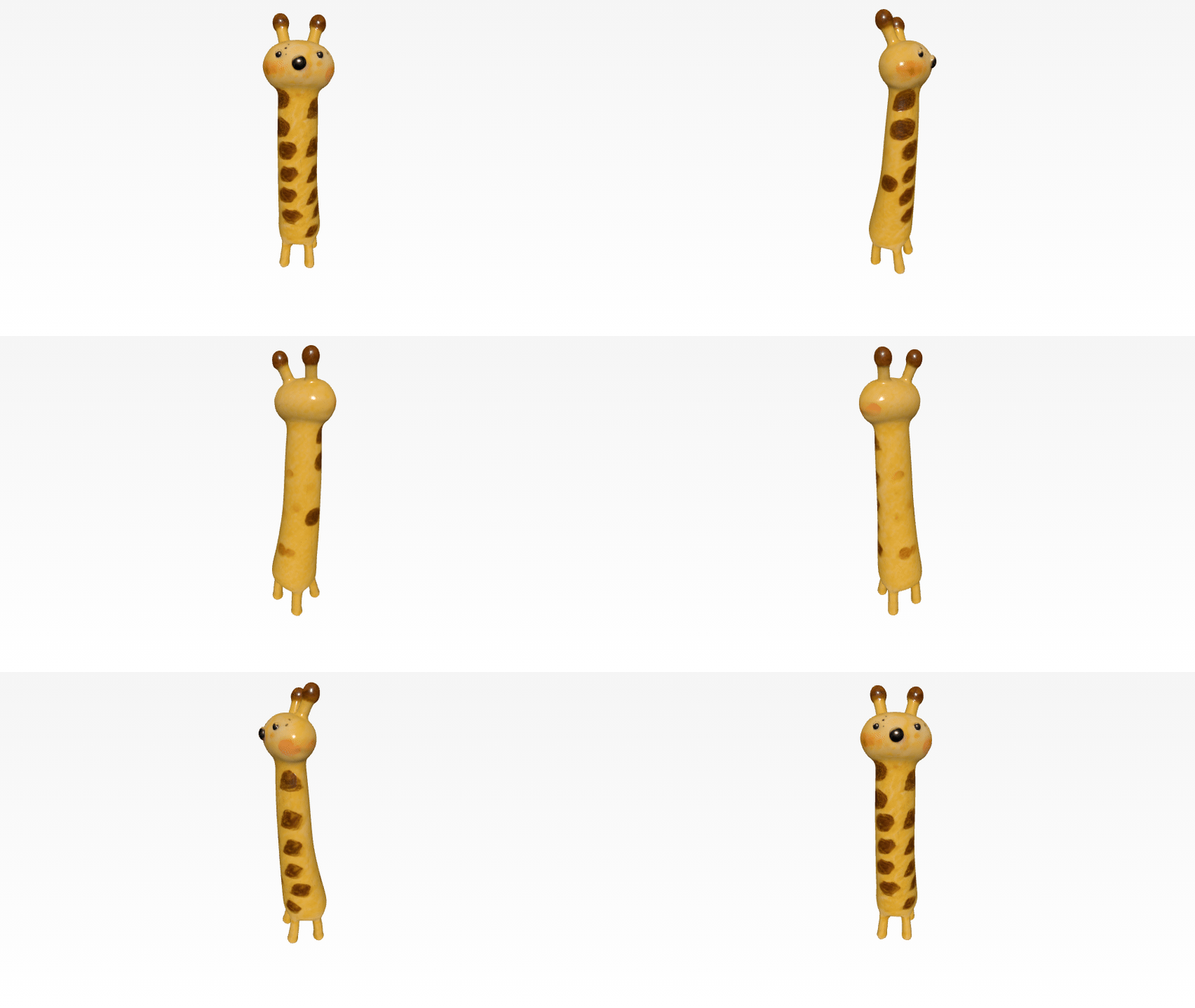
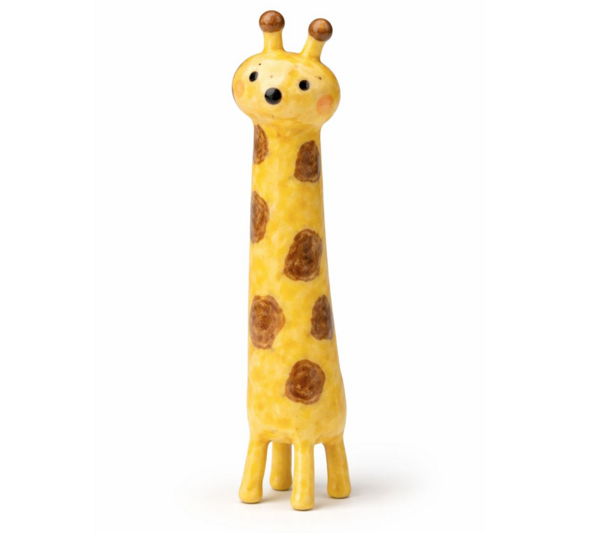
Prompt for the Ceramic Giraffe Figurine: Create a handmade ceramic figurine based on a child’s crayon drawing of a giraffe. The giraffe must be extremely tall and vertically stretched, with a very long, narrow body that feels almost like a single tube from head to legs. The neck blends directly into the body with little separation. The entire body is bright yellow with uneven, irregular brown patches scattered vertically along the torso. The head is small and round, slightly off-center, with a simple childlike face: tiny uneven dot eyes and a small open mouth that looks surprised. Two short ossicones rise from the top of the head, each ending in a rounded brown tip. The legs are thin, straight, and minimally defined, with no hooves or muscle detail. The figurine should look slightly wobbly and asymmetrical, with visible hand-formed imperfections and brushy ceramic glaze. The proportions must remain naïve and exaggerated, exactly like a child’s drawing rather than a realistic giraffe.
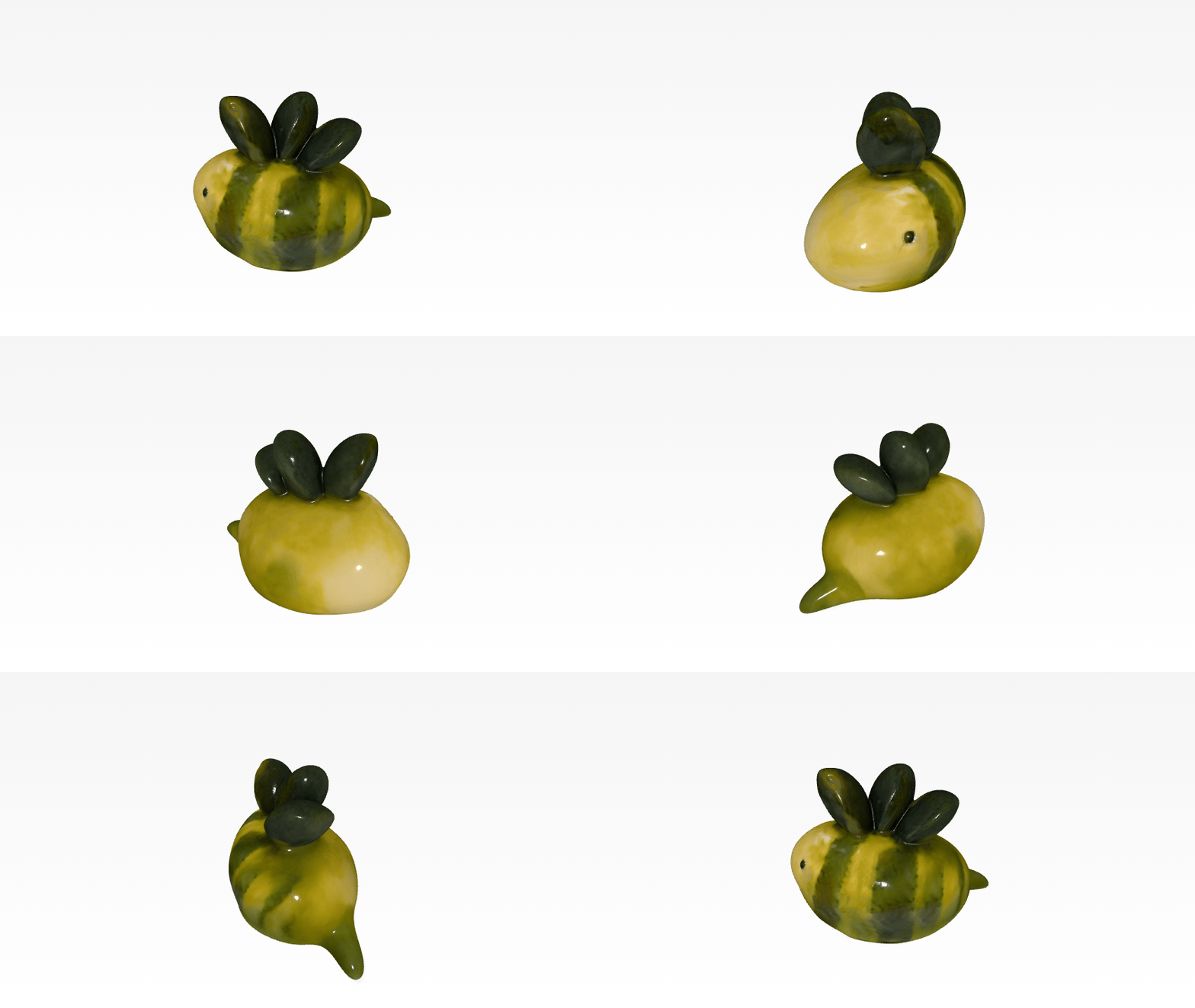
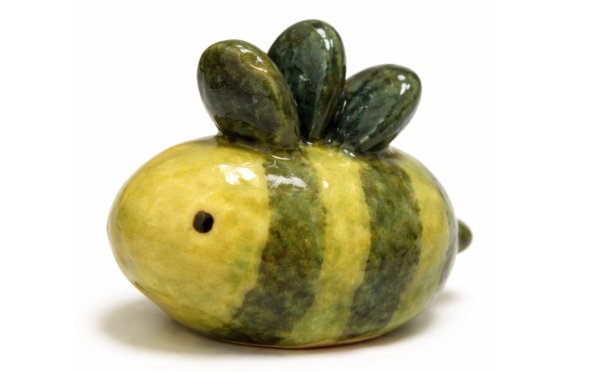
Prompt for the Ceramic Bee Figurine: Create a small ceramic figurine based on a child’s drawing of a bee. The bee has a plump, rounded oval body colored in greenish-yellow tones with darker green shading instead of realistic yellow-and-black stripes. The head is small and round with a single visible dot eye, giving a simple and innocent expression. The wings are thick, stubby, and dark green to nearly black, clustered tightly on top of the body and pointing upward rather than spread out. The overall shape is compact, slightly lopsided, and very simplified, as if sculpted by a child’s imagination. The surface should be glossy ceramic with uneven glaze pooling and soft edges, preserving the naïve, playful style of the original drawing without adding extra details.
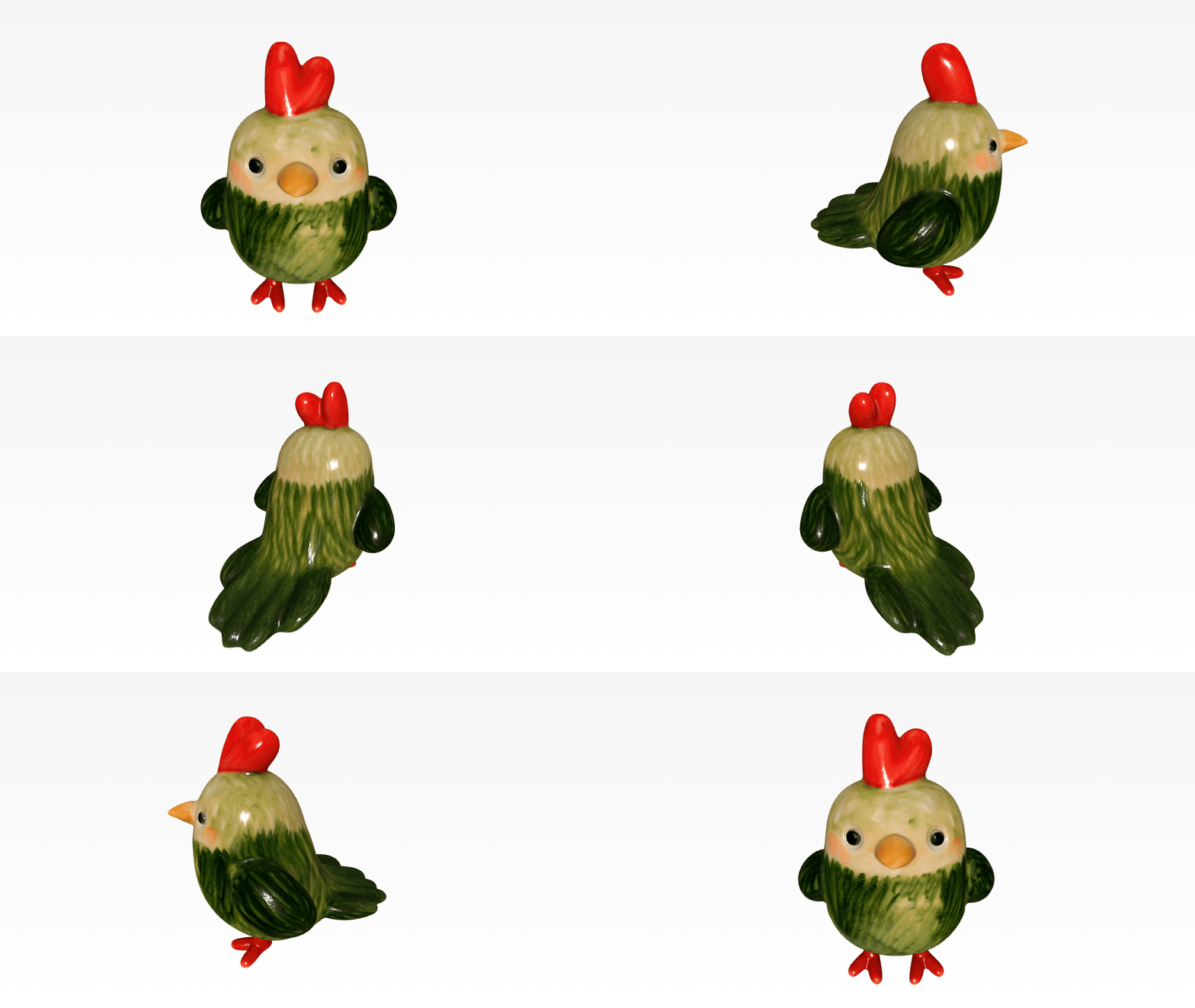
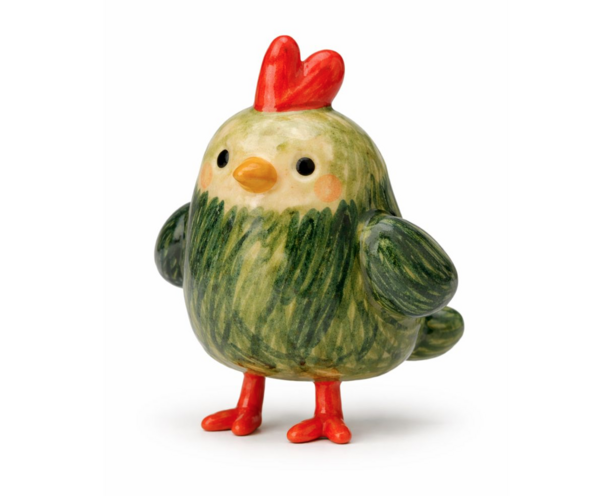
Prompt for the Bird Ceramic Figurine: Create a small ceramic figurine of a bird based directly on a children’s marker drawing. The bird has a chunky, rounded body with an upright posture and intentionally imperfect proportions. Its body is primarily dark green, covered in uneven darker green and nearly black scribble-like patches that resemble visible marker strokes rather than smooth shading. The wings are short, thick, and stubby, slightly raised from the body like rounded lumps, not realistic feathers. The head is small and simple, with two tiny black dot eyes and no detailed facial features. On top of the head is a bright red, cone-shaped crest that tilts slightly forward and looks hand-formed rather than symmetrical. The legs are thin, straight, and bright red, resembling sticks, ending in very simple three-toed feet. The overall silhouette should feel slightly awkward and off-balance, preserving the naïve charm of a child’s drawing. The ceramic surface should be matte to semi-gloss with visible brush or stroke texture in the glaze, mimicking marker lines. Avoid realism — emphasize hand-crafted imperfections, uneven thickness, and playful simplicity.
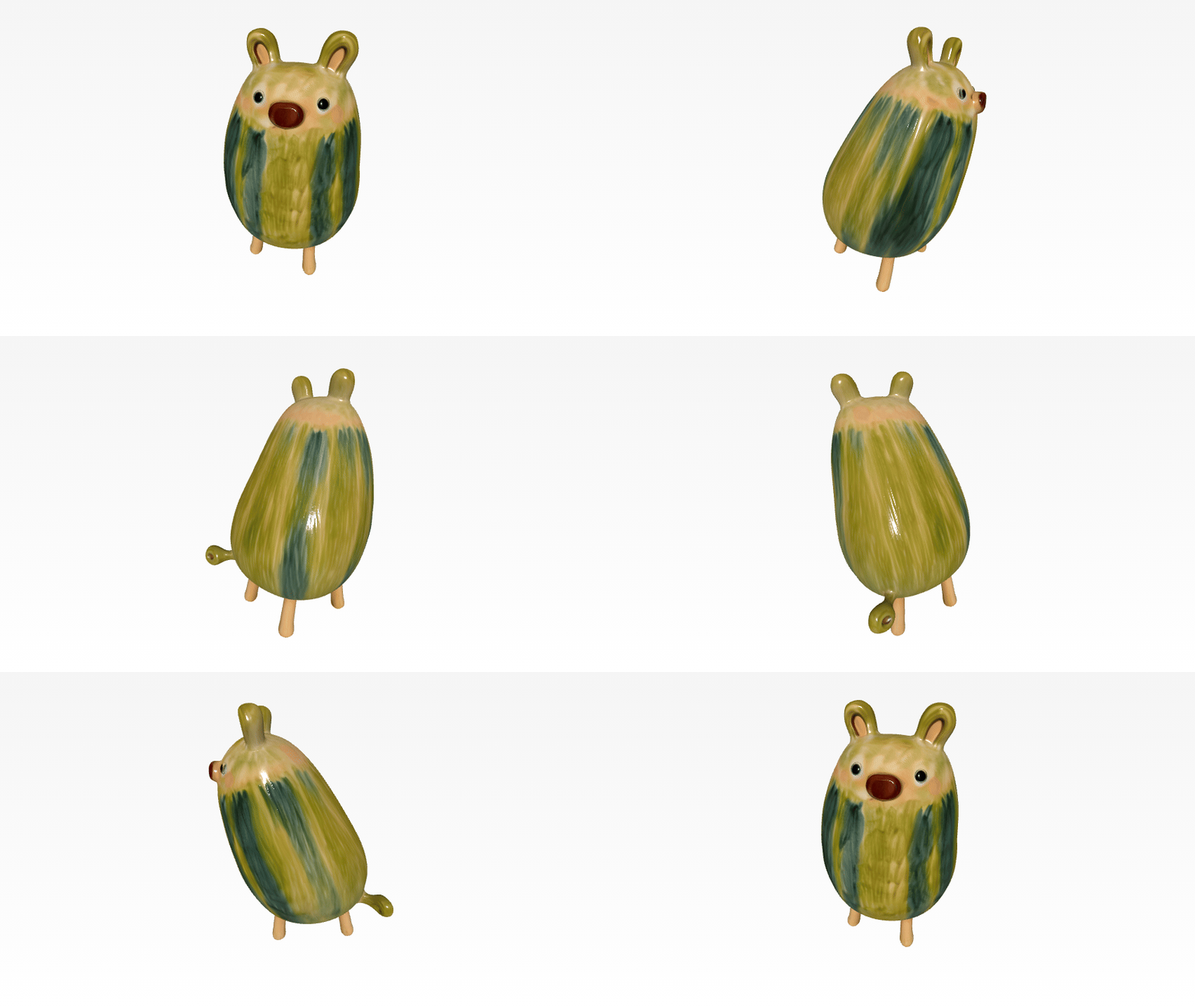
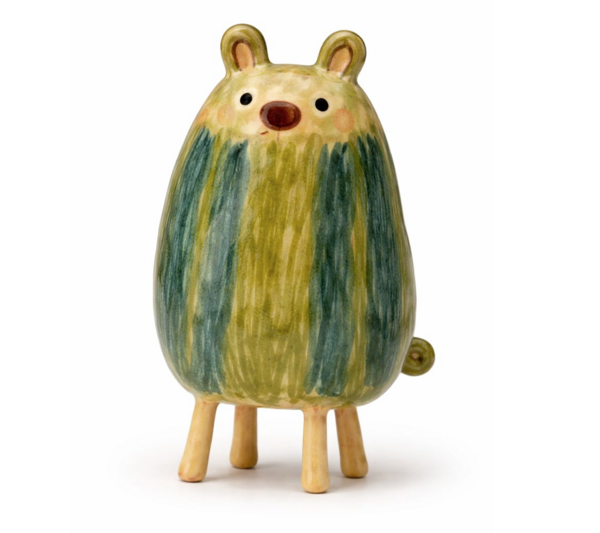
Prompt for the Bear Ceramic Figurine: Create a ceramic figurine of a bear inspired by a child’s drawing, maintaining exaggerated and unrealistic proportions. The bear’s body is tall, wide, and oval-shaped, dominating the entire form. The torso features vertical stripes in dark green and darker bluish-green, applied unevenly to resemble marker scribbles rather than clean patterns. The head is small and sits directly on top of the body with no visible neck. The face is extremely minimal: two small dot eyes and a simple darker patch suggesting a snout. The ears are rounded loop-like shapes placed high on the head, slightly asymmetrical and imperfect. The legs are very thin, straight, and stick-like, extending downward from the body with no defined paws. A tiny rounded tail protrudes subtly from the back. The ceramic finish should preserve wobble and irregularities, with uneven glaze application that echoes the child-drawn texture. The figurine should feel charming, clumsy, and intentionally non-realistic.
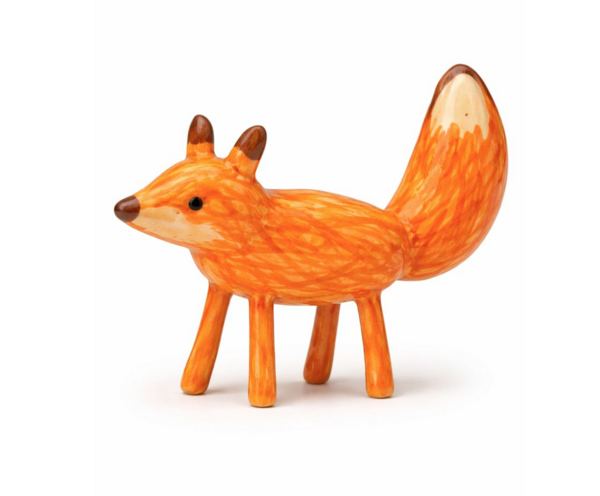
Prompt for the Fox Ceramic Figurine: Create a ceramic figurine of a fox translated from a child’s marker drawing, preserving its playful, naïve style. The fox is shown in a side-facing pose with an elongated oval body in bright orange. The surface should show visible scribble-like texture, translated into brushy glaze strokes or shallow carved lines. The head is small and rounded with a pointed snout extending forward. Two short horn-like ears or antennae emerge from the top of the head, slightly uneven. The eyes are tiny black dots placed asymmetrically. The legs are long, thin, and stick-like, four in total, awkwardly spaced beneath the body with no anatomical realism. The tail is oversized and exaggerated — very long, thick, and curved downward, nearly as large as the body itself. The glaze should be a warm orange with tonal variation and visible imperfections. Avoid realistic fur or anatomy. The figurine should look hand-sculpted, whimsical, and faithful to a child’s drawing.
Техническое задание на производство
ЭТАП 1. КОНЦЕПЦИЯ И НАЗНАЧЕНИЕ
Фигурка проектируется как коллекционный арт-объект на стыке fashion-дизайна и скульптуры. Она предназначена для экспозиции и лимитированных серий и не рассматривается как детская игрушка. В основе подхода — отказ от полной унификации: допускаются следы ручной работы и микро-отличия между экземплярами, которые рассматриваются как часть эстетики и ценности объекта.
ЭТАП 2. ФОРМИРОВАНИЕ ГАБАРИТОВ И ПРОПОРЦИЙ
На этапе проектирования задаются базовые габариты фигурки: высота в диапазоне 280–320 мм (оптимально около 300 мм), ширина по плечам 80–110 мм и глубина 50–70 мм. Масштаб соответствует условному соотношению 1:6–1:7 к человеческому росту. Допуски по размерам составляют ±1 мм для цельных элементов и ±2 мм для сборных деталей.
ЭТАП 3. КОНСТРУКЦИЯ И ДЕКОМПОЗИЦИЯ
Фигурка проектируется как многосоставный объект, состоящий из 6–12 элементов. Конструкция включает отдельную голову с маской, торс, руки, ноги и набор аксессуаров (воротники, сумки, головные элементы). Соединение деталей осуществляется с помощью скрытых штифтов, press-fit посадки и локальной склейки. Конструкция предусматривает раздельную окраску всех элементов до финальной сборки.
ЭТАП 4. МАТЕРИАЛЫ И БАЗОВАЯ ПОВЕРХНОСТЬ
В качестве основного материала используется ABS-пластик либо полиуретановая смола (предпочтительно для арт-тиражей). Мягкие элементы выполняются из PVC или TPU, маски — из акрила для достижения высокого глянца. Все детали должны иметь ровную, плотную поверхность, пригодную для ручной покраски и последующего лакирования.
ЭТАП 5. ПОДГОТОВКА ПОВЕРХНОСТИ
Перед покраской каждая деталь проходит ручную шлифовку с последовательным увеличением зерна от 800 до 2000. После шлифовки поверхность обезжиривается и покрывается акриловым грунтом в 1–2 слоя. Грунт формирует матовую, равномерную основу и подготавливает поверхность к ручному нанесению цвета.
ЭТАП 6. РУЧНАЯ ПОКРАСКА
Покраска является ключевым этапом и выполняется преимущественно вручную кистью. Каждая деталь окрашивается отдельно. Используются профессиональные акриловые краски; для отдельных глянцевых зон допускается применение разведённого автомобильного акрила. Маски, лица и мелкие элементы полностью прорисовываются вручную. Допускаются следы кисти и микро-отклонения цвета между экземплярами как осознанный художественный приём. Аэрограф применяется ограниченно — для подложек, крупных цветовых плоскостей или мягких переходов.
ЭТАП 7. ЦВЕТ, КОНТРАСТ И ДЕТАЛИЗАЦИЯ
Цветовые решения задаются по RAL или Pantone с возможностью кастомной колеровки. Контраст между зонами достигается не только цветом, но и степенью глянца. Контуры, швы и переходы могут быть визуально подчёркнуты. Тампонная печать и декали допускаются только в исключительных случаях и не являются основным методом нанесения графики.
ЭТАП 8. ЛАКИРОВАНИЕ И ГЛЯНЕЦ
После полного высыхания красочного слоя производится лакирование. Используется акриловый или полиуретановый лак автомобильного класса. Лак наносится выборочно: глянцевыми делаются маски, обувь и аксессуары, при необходимости создаётся контраст между глянцевыми и более спокойными зонами. Уровень блеска составляет 85–95 GU. Межслойная сушка — не менее 24 часов, с возможной ручной полировкой после отверждения.
ЭТАП 9. ФИНАЛЬНАЯ ДОРАБОТКА
После завершения обжига фигурки проходят финальную ручную проверку и минимальную доработку, направленную на устранение острых кромок, неровного дна или элементов, мешающих устойчивости. Любые вмешательства должны быть максимально деликатными и не нарушать цельность глазурного слоя и наивный характер формы. Фигурка должна устойчиво стоять и выглядеть немного неуклюжей, но законченной.
ЭТАП 10. КОНТРОЛЬ КАЧЕСТВА
Контроль качества осуществляется визуально и тактильно без ориентации на полную идентичность экземпляров. Проверяется целостность формы, отсутствие критичных трещин и сколов, устойчивость и сохранение художественного образа. Небольшие отличия между фигурками по форме, цвету и фактуре считаются допустимыми и подтверждают ручной, арт-ориентированный характер изделия.
Использованные нейросети