INTRODUCTION
Concept On, formerly widely known as On Running, is a Swiss activewear brand founded in 2010. Its uniqueness lies in the fact that while most sports brands build their language around effort — sweat, competition, discipline, victory — On takes a different approach. Its communication is more restrained, concise, and almost weightless. The brand does not shout about pushing the athlete to become stronger. Instead, it suggests that movement can feel effortless — as if the body is «on.» This is why On is interesting as a communication case. Its identity is built not only around a product, but around a physical promise: the feeling of running on clouds. The CloudTec sole, the white space, the short verbal messages, the Swiss precision, the soft futuristic imagery — all these elements work together to translate technology into emotion. In this project, we analyze On as a brand that turns performance into a sensory and cultural experience. Its communication persuades on two levels at once. On the rational level, it explains technology, engineering and product function. On the emotional level, it creates an image of movement as something clean, modern, premium and socially meaningful.
The central question of this research is: How does On transform running technology into a desirable lifestyle identity? Using the information processing likelihood model, we examine how On combines rational arguments with emotional cues. Using social identity theory, we examine how the brand transforms individual movement into a shared cultural identity—a community of runners, city dwellers, athletes, creatives, and those who want to feel active without appearing overly athletic. On’s communication is successful because it doesn’t just sell shoes. It sells a state of being: lightness, control, precision, mobility, and understated confidence.

The latest addition to ON’s renowned «Cloud Monster» line is here, now in its third generation and updated with a three-layer construction.
On positions itself as a premium performance brand for people who see movement as both achievement and lifestyle. The brand does not separate function from feeling. Its products are presented as engineered objects, but also as companions for flow, clarity and everyday motion. This dual positioning allows On to speak to runners, athletes, commuters, design-conscious consumers and wellness-oriented audiences without changing its core language.
It addresses several overlapping audiences:
- Performance runners need evidence: cushioning, responsiveness, durability, race credibility and clear product differentiation.
- Urban active consumers need identity: a shoe that looks refined enough for everyday wear while still carrying the aura of sport.
- Premium wellness consumers need emotional alignment: movement, health, clarity, nature, balance and self-improvement.
- Fashion-aware consumers need cultural relevance: collaborations, cinematic campaigns, celebrities and a product language that fits into contemporary style. On’s communication works because it does not choose only one of these groups. It creates a language flexible enough to be decoded differently by each of them.
COMMUNICATION CHANNELS
Blog: Where the Berlin community runs together
Blog: Runners' quirks: Be the weird you want to see in the world
On’s public field is distributed across several types of channels:
- the official website, where technology and product logic are explained
- social media, where movement becomes atmosphere and identity
- press releases, where the brand speaks to journalists, investors and industry observers; retail spaces, where the brand becomes a physical environment
- community platforms and events, where running becomes participation rather than simple consumption. Together, these channels create a layered communication system. Each one speaks in a slightly different register, but all of them return to the same promise: movement as a source of energy, connection and self-definition.
On’s new store in Chicago’s Rush and Oak District
On’s unique technology 
The On website is the brand’s central persuasive platform. Here, the communication is more explicit. Product pages explain technologies, use cases, materials and performance benefits. The design remains clean, but the content gives audiences enough information to justify attention, trust and purchase. The website is where On’s emotional promise becomes rationally supported. It tells the audience not only that movement feels good, but why the product can make it feel that way. On’s product pages work like small arguments. The shoe is shown first as an object of desire: clean, isolated, precise. Then the page gives reasons: cushioning, materials, terrain, weight, support, use case and model comparison. The viewer is invited to feel first and justify second. This matters because premium sportswear needs both emotion and proof. A beautiful shoe may attract attention, but a technical explanation helps transform attraction into trust. On’s technology pages explain the brand’s core product logic. CloudTec is not presented only as a sole structure. It is described as something that shapes how the shoe moves and how the runner feels. This is important: the brand does not isolate technology from the body. It connects engineering to sensation. This makes the technology page a key communication channel. It supports rational evaluation, while still preserving the poetic promise of running on clouds.
On’s social media channels work differently from the website. They do not primarily explain. They make the brand feel. The images and videos create a visual rhythm of bodies, shoes, surfaces, tracks, streets, mountains and moments of motion. A viewer can understand the brand before reading a single technical description. This is where On becomes less like a product catalogue and more like a mood: light, precise, active and quietly aspirational. Short-form video changes the rhythm of brand communication.
On running: X4 Grey/Green Cloud X 4 OC 2024
On’s press communication makes the brand legible for journalists, investors and the wider industry. Press releases about partnerships, product innovation, retail openings and financial growth are not neutral announcements. They help frame the brand as expanding, culturally relevant and innovation-led. This PR layer is important because On is not only building consumer desire. It is also building institutional credibility. The partnership with Zendaya is one of On’s clearest examples of cultural expansion. The campaign Dream Together positions movement as something social and connective rather than purely competitive. Zendaya does not only function as a celebrity endorsement. She helps On enter a wider cultural conversation about movement, well-being and shared experience. This is a shift from «running shoes for runners» to «movement as a cultural language.»
On Running’s Light-Spray Technology
Running just got a lot more cool thanks to the latest Loewe x On collaboration
On’s retail spaces can be read as physical media. A store is not only a place where products are sold. It is a controlled environment where the brand can stage its values: precision, lightness, testing, materiality, technology and community. When the visual restraint of the website becomes architecture, the brand identity turns into an experience. For On, retail is especially useful because the promise of the product is sensory. The brand says that the best engineering is felt. A store allows that statement to become literal. Community channels matter because running is not only represented online. It is performed. Platforms such as Strava, running events, local crews and community challenges allow people to turn movement into social identity. Routes, distances, pace and progress become public signs. When a brand enters this space, it is no longer only advertising. It becomes part of how people show who they are. For On, this supports the idea of movement as belonging.
Run Together It has the power to inspire change. Watch as three dreamers find out how — and find your very own crew to run with.
THEORETICAL FRAMEWORK
Communication theory allows us to analyze On not as a collection of beautiful visuals, but as a system of encoded meanings. Every element of the brand can be read as a message: the hollow sole, the word «cloud», the quiet typography, the campaign casting, the store environment, the social media rhythm. Theory helps explain why these elements work and what kind of audience response they produce. This project uses two theories: the Elaboration Likelihood Model and Social Identity Theory.
Theory 1: Elaboration Likelihood Model The Elaboration Likelihood Model suggests that persuasion can happen through two routes. The central route is based on careful evaluation. Audiences pay attention to arguments, evidence, facts and technical explanations. The peripheral route is based on quicker cues. Audiences respond to aesthetics, emotion, authority, social status, atmosphere and familiarity. On uses both routes at the same time. This is one of the reasons its communication works across such different audiences. Central route in On communication: For highly involved consumers, especially runners, On provides rational reasons to believe the brand. CloudTec, Helion foam, product specifications, model categories, race credibility and material explanations all support central-route persuasion. They help the audience think: this is not just a beautiful shoe; there is a technical system behind it. This route is important because premium sportswear needs justification. The higher the price and the more specific the performance claim, the more the audience needs evidence. Peripheral route in On communication: For less involved or more lifestyle-oriented audiences, On communicates through peripheral cues. Minimalist Swiss design signals precision. White space signals confidence. Cinematic photography signals emotion. Zendaya signals cultural relevance. The CloudTec silhouette signals difference. The word «cloud» signals comfort before the technology is even understood. These cues do not require deep analysis. They work quickly, almost intuitively. The viewer feels that On is light, premium and intelligent before they can fully explain why.
Theory 2: Social Identity Theory Social Identity Theory explains how people define themselves through groups and communities. In branding, this means that products can become identity markers. A person does not only buy what a product does. They also buy what it says about them: what group they belong to, what values they share, what lifestyle they want to be associated with. On uses this mechanism carefully. It does not only invite people to buy running shoes. It invites them to see themselves as part of a movement culture.
Real Energy in a Global Running Campaign
On’s communication constructs several possible identities:
- the runner who understands performance;
- the urban mover who values function and style;
- the athlete who wants precision;
- the wellness-oriented person who treats movement as self-care;
- the design-conscious consumer who prefers quiet premium objects; 6)the community participant who wants to move with others.
This is not accidental. The brand’s communication allows different audiences to recognize themselves inside the same system.
Runners' quirks: Be the weird you want to see in the world. on
On also balances two psychological needs: the need to belong and the need to feel distinct. The brand offers belonging through running, movement, community and shared campaigns. At the same time, it offers distinction through its unusual sole construction, premium minimalism and Swiss design codes. This balance is powerful. On allows people to feel part of a wider active culture without looking like everyone else inside it.
ANALYSIS
The analysis reads On through two connected lenses: Elaboration Likelihood Model and Social Identity Theory. The Elaboration Likelihood Model helps us see how the brand moves between proof and atmosphere: between technical explanations that reward attention and visual cues that work almost instantly. Social Identity Theory helps us understand how On turns movement into belonging — not only a product benefit, but a way for people to recognize themselves inside a wider culture of motion. This section does not treat theory as a label attached to each image. Instead, the theories are woven into the reading of the brand. Each screen looks at a specific element of On’s communication and asks how it persuades, what kind of meaning it produces, and how the audience is invited to read itself through the brand. On’s most powerful communication starts before the audience reads a caption or watches a campaign. It starts with the object itself. The CloudTec sole makes the shoe recognizable from its structure. The repeated hollow forms create a visual signature that can be read even when the logo is small or absent. This is important because On does not rely only on graphic identity. Its product engineering becomes part of its visual identity. From a semiotic perspective, the sole works as a sign of lightness, cushioning and difference. Through the Elaboration Likelihood Model, it also works on two levels: it gives quick visual distinctiveness to low-involvement viewers, while suggesting to more involved runners that there is a technical logic behind the form.
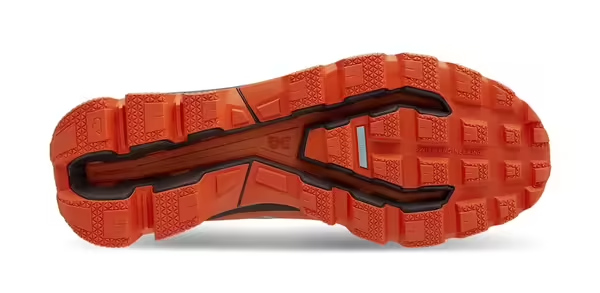
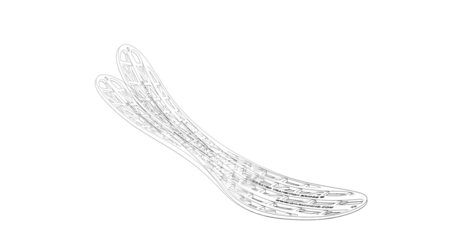
On’s unique technology. Pressroom
The name «On» is unusually short. It sounds less like a noun and more like a state: switched on, turned on, ready to move. This makes the brand name behave almost like a command or a condition. It does not describe running directly. It suggests activation. The logo supports this impression: compact, soft, kinetic and easy to place across shoes, screens, packaging, stores and campaign materials. Here persuasion works mostly through immediate association. The viewer does not need to analyze the logo in detail to understand its energy. The brand feels quick, clean and already in motion.
The On Cloud Evolution Continues with the Cloud 6. Pressroom