How communication theory works in the field of design
In contemporary society design is a special way of communication, where visual identity have to «speak» with the customer as well as with the competitor.
Communication theory offers a framework and gives the understating how design works as a form of mediated social practice, when it is more than visual decoration.
Nowadays people are saturated with digital media, so design addressed to young and creative audiences becomes a key site where meanings, identities and relationships are constructed, negotiated and contested through communicative processes. For this reason, theoretical models of communication are increasingly important for critically analysing how design organises attention, shapes interaction and distributes power within online environments.
Craig conceptualises communication theory as a «practical metadiscourse» that both arises from everyday talk about communication and returns to practice as a resource for reflecting on and resolving communication problems.
Design becomes a part of a broader communicative field in which visual, textual and interactive elements function as arguments about how communication should work in the certain society, which design «creates».
In this sense, visual identities addressed to certain auditory do not simply «represent» information, but propose normative models of participation, visibility and mutual recognition.
Socio-psychological Approach (by Dr. Robert T. Craig) view communication as individual interactions producing predictable effects: persuasion, attitude change, habit formation, and expectation-setting.
It means that design should be based on «behavioral triggers»: clear call-to-action, short texts, hints to simplify and make faster the communication.
When working with young and creative audiences, design has to take into account the low level of attention and high sensitivity to emotional tone and «vibe» interface.
Another important approch in communication theory is Sociocultural approach.
Sociocultural theories consider communication as a process through which people create norms, roles, identities and «rules of the game» in the community. The behaviour is not only motivated by individual aims, but also by cultural scenarios and role expectations.
It means that the field of communication — design — can create a real model of people society with norms and rules. Users tend to act as participants of cultures and subcultures: youth scenes, creative communities, trade unions.
The design of platforms for creative people (portfolio-services, social networks) materialize norms: what formats of works can be seen, what does it mean to be successful in this community.
Rhetorical approach understands communication as the art of persuasive utterance in conditions of uncertainty and controversy. It shows the importance of convincing message and tools of influence.
It allows to construct visual and verbal arguments in a meaningful way. It defines how design affects decisions and how to combine emotional and rational elements.
Therefore, Communication theory systematizes observations about how visual elements (color, typography, layout) influence user attention, clarifies why certain graphics persuade via central or peripheral routes and give us an opportunity to make a conscious choices when creating a design product, based on what we need.
Presentation for a general audience
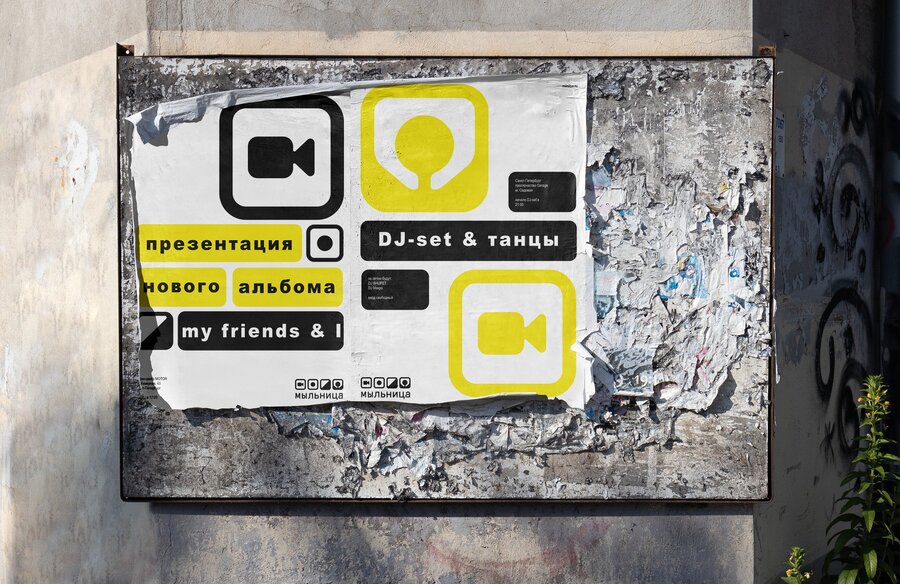
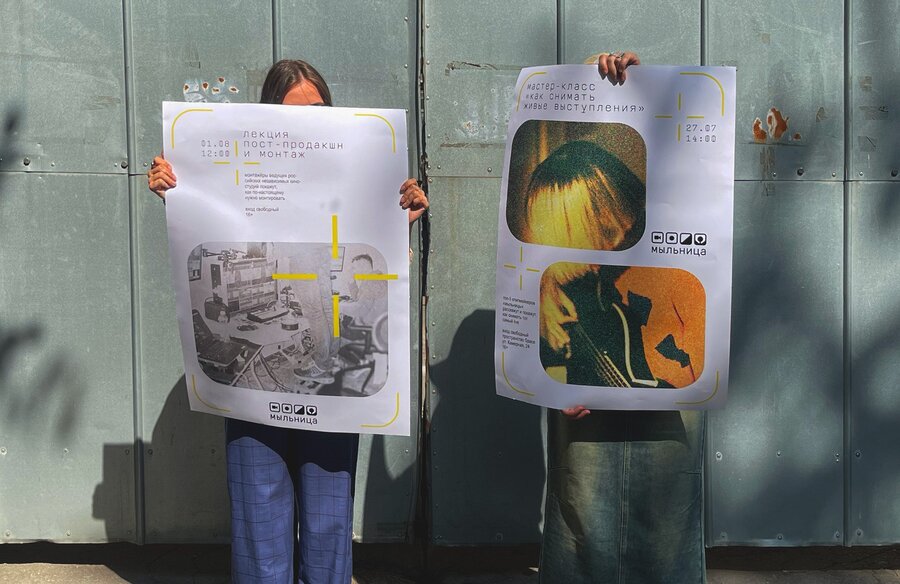
Mylnitsa — A Platform Made for You. Easy to Use. Easy to Join. Easy to Create.
Have you ever made a short video just for fun? A clip for a song you love. A visual idea that only makes sense to you — and people like you.
Mylnitsa is a platform built exactly for that. For amateurs, beginners, outsiders, and self-taught creators. For those who don’t call themselves professionals, but create anyway. The platform is designed to be simple, mobile, and instantly accessible. No complicated tools. No long learning curve. No barriers to entry.
You can join, explore, and start collaborating in just a few clicks — from your phone, tablet, or laptop. Creativity doesn’t wait, and neither should you.
This Is Your Space
Mylnitsa is not about perfection. It’s about trying, experimenting, and showing your work without fear.
Here, you don’t need expensive tools, industry connections, or approval from experts. You just need an idea, and the courage to share it, everyone starts on equal ground. What connects people here is not status, but curiosity and the desire to create. And there are technical features to help you:
- Creator profiles — show who you are and what you create
- Project proposals — invite others to collaborate
- Team search — find the right people for your idea
- Creative feed — explore, react, and stay inspired
Built for Collaboration
Myl’nitsa brings people together through shared projects and creative collaboration. You don’t have to work alone:
- Find like-minded creators
- Join existing projects or propose your own
- Build teams around ideas, not titles
The platform helps you discover people who think and feel creatively like you, and turn individual ideas into collective results. By working together, creators learn faster, gain new perspectives, push ideas further than they could alone. This shared process turns creativity into a living conversation.
Not Just Watching — Participating
Mylnitsa invites you into a dialogue. You don’t scroll endlessly and disappear. You interact. You respond. You become visible. Every like, comment, or shared clip is a small exchange — attention for attention, inspiration for inspiration. You post — people respond. You comment — ideas grow. You collaborate — meaning is created together. This mutual support keeps creativity alive and moving.
Why Join?
Because creating together is powerful. Mylnitsa is not just a digital tool. It’s a community of creators connected by shared interests and creative energy.
You are not just a user. You are part of a collective process where creativity is supported, seen, and valued.
- Share your clips without judgment
- Discover people who think visually like you
- Learn by watching, trying, and repeating
- Feel part of something real, not commercial
Here, creativity feels lighter, safer, and more alive.
Mylnitsa — Simple to Access. Powerful Together.
Create freely. Collaborate easily. Grow together.
Presentation for a professional audience
We’d like to introduce you to Mylnitsa — a platform that connects creators working with video content. Our goal is to show you how Mylnitsa can expand your professional environment, bring new projects, and create fresh creative opportunities.
What problem are we solving? Right now, many young musicians and creators find themselves in a situation where they can’t afford expensive production, don’t know whom to approach, lack experience working with visual specialists.
On the other side, there are you — motion designers, cinematographers, editors. You have skills, style, experience, but sometimes you lack: fun small projects, space for visual experimentation, quick, simple collaborations with real artists.
We have the solution: Mylnitsa. It is a creative community that brings together people who make video and those who need it — artists, musicians, and emerging creators. It’s a place where musicians find visual specialists, visual specialists find artists, quick creative projects are born, you can build your portfolio, experiment, and grow your visibility.
Why this matters to you?
Creative tasks without bureaucracy. Small, flexible, fast projects — perfect for testing ideas and exploring new styles.
New connections with artists. Musicians are actively looking for people who can turn their ideas into visual stories — even with limited resources. You can be that person.
Real portfolio, real cases. All projects created within Mylnitsa are real: real artists, real tasks, real outcomes.
Expanding your professional circle. New contacts, new opportunities, new paths for growth.
What values do we have? We’re building a space based on accessibility — low entry barriers, collaboration — people come together around ideas, experimentation — freedom from commercial constraints, support — both for newcomers and experienced creators, human warmth and openness — not competition, but collaboration.
How it works?
- A musician posts an idea, a demo, or a request.
- You browse projects that match your style or interests.
- You connect, discuss references, define the scope.
- You create — shooting, editing, motion design, whatever you prefer.
- You end up with a portfolio piece, a satisfied artist, and a new relationship.
What you gain professionally?
- Style development — try things commercial projects don’t always allow.
- Personal brand growth — every new artist = a new audience for your work.
- Flexible formats — music videos, verticals, motion visuals, teasers — choose what inspires you.
- A creative network — a community of people who value collaboration and are open to new partnerships.
The core communication message: not a «platform, ” but an „opportunity“. Our main point is simple: Mylnitsa is not just a digital tool — it’s a creative environment. We don’t just match people like a service. We build a community where every member can be visible, valued, and in demand.
Why join Mylnitsa? To work on projects you want to create. To try things you’ve been postponing. To expand your professional network. To meet artists looking for your style. To grow your creative comfort zone.
Mylnitsa is a place where visual creators can be free, bold, and truly seen. If you want to grow your style, find new artists, and work in a flexible, collaborative format — welcome to our community.
How the communication theory presented in the online course served as the basis for creating these presentations