Introduction
This research focuses on the communication between the animation studio Glitch Productions and its audience. Glitch Productions is an independent animation studio founded in 2017 by brothers Kevin and Luke Lerdwichagul in Sydney, Australia. From the beginning, the studio positioned itself as an alternative to the traditional Western animation industry and as a brand aimed at teenage and young adult audiences.
Unlike major studios and streaming platforms, Glitch Productions develops an independent production model: its main series are released for free on YouTube*, while further project development is supported through views, merchandise, licensing, collaborations, offline activities, and the paid fan community Glitch Inn.
The core positioning of Glitch Productions is connected to the idea of independent, creator-led, and internet-native animation. The studio does not simply produce animated series; it also tries to prove that original animated projects can exist outside the traditional studio system, attract a mass audience, and preserve the creative autonomy of their creators. In Glitch’s communication, the studio often emphasizes that the Western animation industry usually focuses either on children’s content or on adult animation, while teenage and young adult animation remains underrepresented. Glitch Productions aims to fill this gap.
The studio’s main projects include Meta Runner, Sunset Paradise, Murder Drones, and The Amazing Digital Circus. The earlier projects helped Glitch develop its production model, but the first major breakthrough was Murder Drones, a series by Liam Vickers that combines science fiction, dark humor, horror elements, and an ironic tone of voice. Later, The Amazing Digital Circus, created by Gooseworx, became an even larger internet phenomenon. The project combines surreal comedy, psychological themes, a bright visual style, and the feeling of an absurd digital nightmare. Around it, a large international fan community quickly formed, creating fan art, memes, theories, cosplay, and discussions of symbolism. Glitch Productions is interesting for analysis not only as an animation studio, but also as a contemporary digital-native media brand. Its success is directly connected not only to the quality of its content, but also to the way the studio builds relationships with its audience. Glitch fans are not limited to passively watching episodes. They discuss lore, create user-generated content, buy merchandise, participate in online activities, react to the creators’ posts, and sometimes become part of the promotion of the projects. The target audience of Glitch Productions consists primarily of teenagers and young adults, approximately 16–30 years old, who actively consume online entertainment. These are users of YouTube*, TikTok, X/Twitter*, Reddit, Discord*, and Instagram* who are interested in independent animation, internet culture, dark humor, science fiction, horror elements, psychological themes, complex lore, and fan theories. An important feature of this audience is its high level of engagement. Viewers do not simply watch the shows; they want to be part of an online community: creating fan art, memes, cosplay, discussing symbolism, following the creators, and participating in the life of the brand between releases.
For this reason, Dialogic Theory was selected as the theoretical framework for analyzing the communication of Glitch Productions. This theory allows communication to be examined not as a one-way transmission of a message from the brand to the audience, but as a process of relationship-building through dialogue, feedback, trust, openness, and recognition of the other party’s importance.
The research question of this study can be formulated as follows: how does Glitch Productions build and maintain dialogue with its audience through digital platforms?
Communication Channels
The communication of Glitch Productions is built around constant presence in the digital environment. The studio uses YouTube*, X/Twitter*, TikTok, Instagram*, Reddit, Discord, and Glitch Inn. These platforms perform different functions, but together they form a unified fan ecosystem. Through them, the brand publishes episodes, trailers, short-form videos, merchandise announcements, reactions, memes, behind-the-scenes materials, AMAs, polls, messages to fans, and formats in which the audience becomes part of project promotion.
Official YouTube* channel of GLITCH
YouTube* is the main Glitch Productions channel, where episodes, trailers, shorts, and announcements are released. Free distribution helps the studio grow a global audience, but reduces direct income, which is offset by merchandise, licensing, collaborations, events, and Glitch Inn.
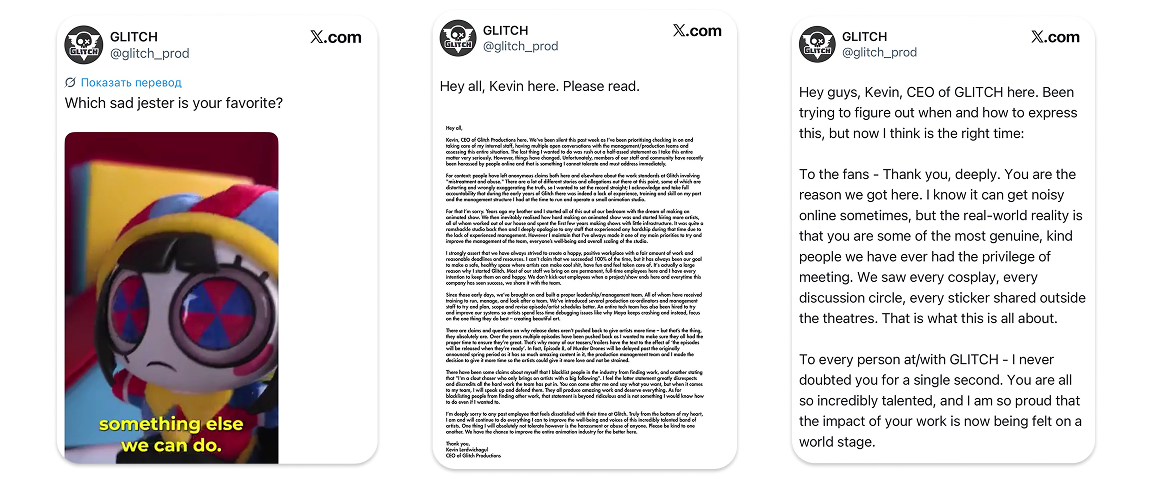
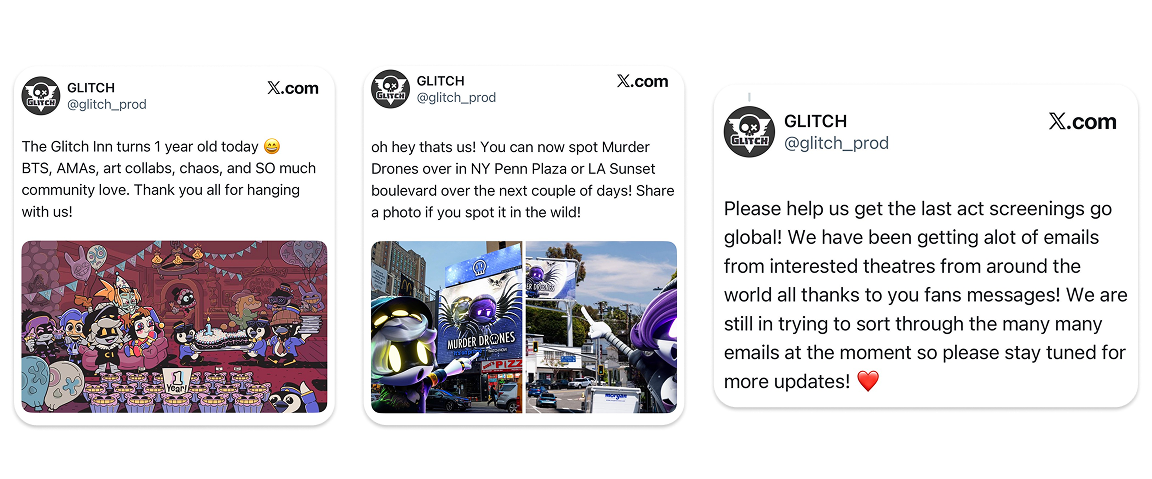
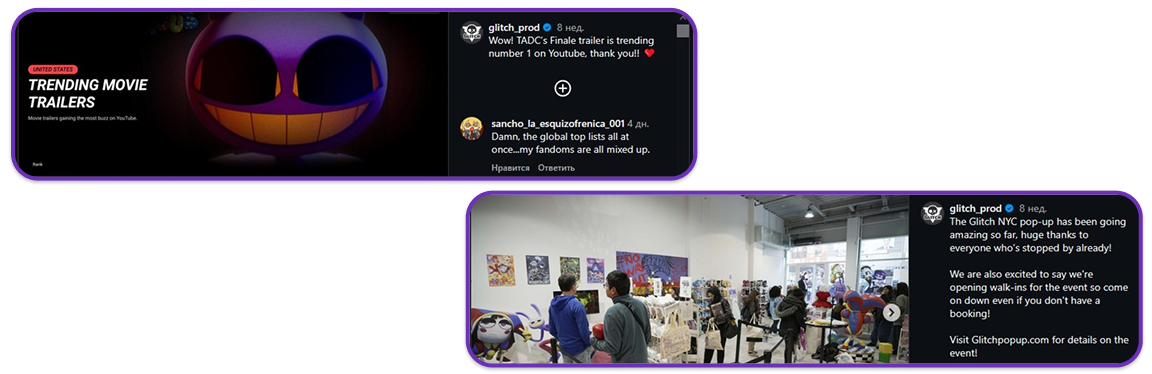
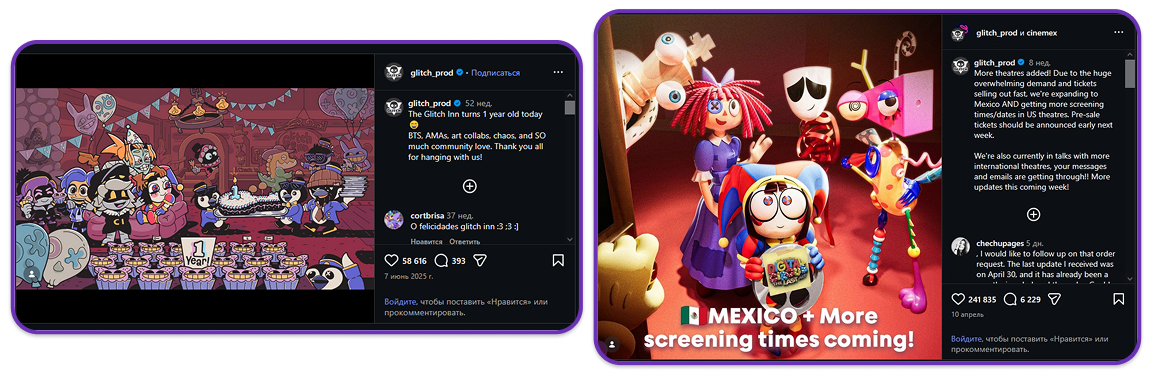
X/Twitter*, TikTok, and Instagram* are used for fast engagement through memes, short clips, polls, merch updates, and promotional posts that keep interest between releases. Some posts also encourage fan participation, such as reactions to characters or real-world billboards.
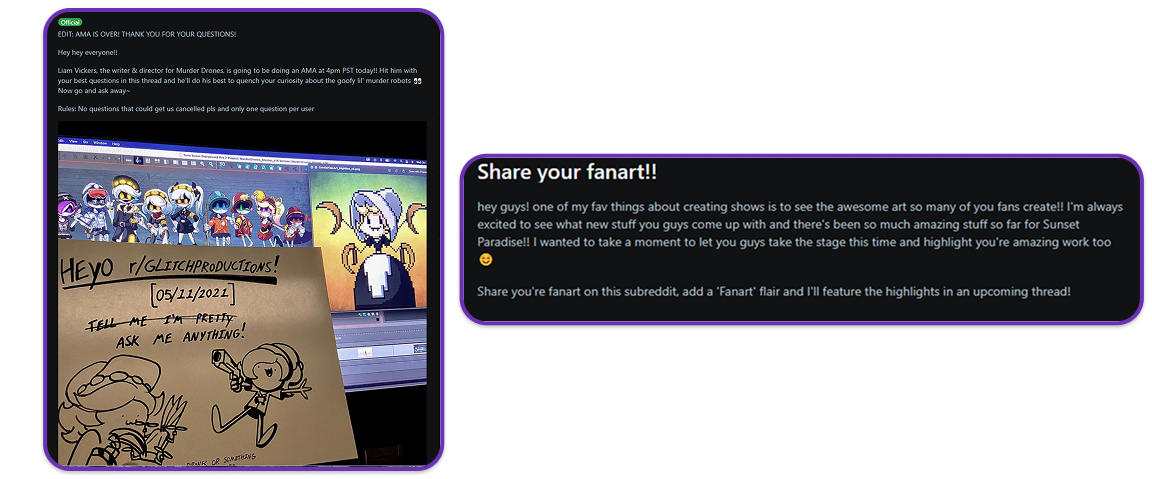
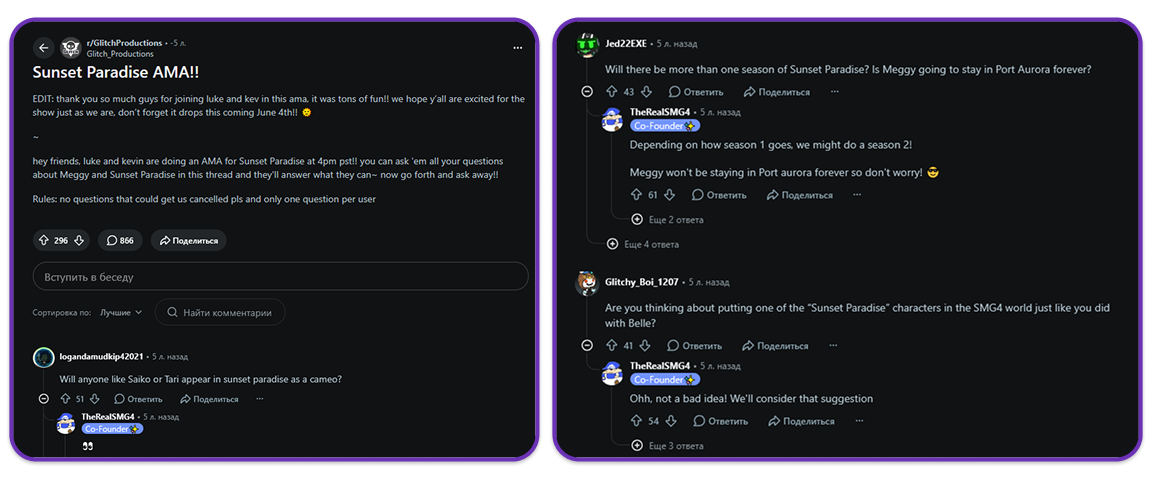
Reddit serves as a space for deeper interaction, especially through AMAs. Creators like Luke and Kevin or Liam Vickers answer questions about story, production, and lore, showing that fan input is actively considered rather than ignored.
Discord, linked to Glitch Inn, supports a paid community with exclusive access to behind-the-scenes content, AMAs, concept art, and collaborations. It functions as a more intimate fan space, though full access is limited to paying members.
Official X/Twitter* account of GLITCH
The tone of voice of Glitch Productions is a separate communication tool. It can be described as informal, friendly, self-ironic, meme-based, fan-oriented, emotional, and internet-native. The studio’s posts often sound as if they are written not by a company, but by a member of the community. Communication uses GIFs, reaction images, humorous captions, internal fandom jokes, and emotional phrases such as «we cooked, ” „you are not ready, ” or „chaos incoming.“ This style reduces the distance between the brand and the audience and helps Glitch appear as part of its own fandom.
Reddit community of GLITCH Productions
The communication goals of Glitch Productions can be divided into several areas.
The first goal is maintaining audience attention between releases. Since animation takes a long time, the studio fills gaps with memes, short videos, announcements, behind-the-scenes content, and merchandise updates. Even after Murder Drones ended, it stays relevant through merch, promos, and collaborations.
The second goal is building a fan community. The studio uses informal, meme-style communication that makes it feel embedded in its own fandom and creates a sense of shared identity.
The third goal is encouraging user-generated content. Fans produce art, theories, cosplay, and analyses, supported by lore-heavy projects like The Amazing Digital Circus and Murder Drones, which naturally invite interpretation and creativity.
The fourth goal is increasing loyalty. This is supported by free access to core content, regular updates, Glitch Inn, merchandise, and behind-the-scenes materials. The studio also emphasizes that revenue is reinvested into production.
The fifth goal is promoting new projects. This is done through trailers, posters, merch drops, events, screenings, and collaborations, with audience reaction often influencing which projects continue.
Thus, the communication channels of Glitch Productions work not only as promotional tools. They form the brand’s public field, where the audience can watch, discuss, create, react, buy, participate, and help spread the projects.
Instagram* posts account of GLITCH
Theoretical Framework
In this study, Dialogic Theory is used as the main theoretical framework. The theory is needed not simply to describe which platforms Glitch Productions uses, but to explain how the studio’s communication turns into relationships with its audience. If Glitch is viewed only through a list of social media platforms, it appears as an active media brand. But through Dialogic Theory, it becomes clear that the key feature of the brand is not the number of platforms, but the nature of its interaction with the fan community.
Dialogic Theory is a theory of public relations that explains how organizations can ethically build high-quality relationships with the public through dialogue. In this theory, dialogue is understood not as a one-time exchange of messages, but as a process of interaction between an organization and its audience, based on honesty, openness, the exchange of ideas, and respectful treatment of the other party. An organization must be ready not only to speak, but also to listen, respond, recognize the interests of the audience, and maintain long-term relationships.
Mutuality refers to a reciprocal relationship between an organization and its audience, where the audience is treated as an active partner rather than a passive target. For Glitch Productions, this is reflected in how fan engagement directly supports the studio’s success through views, discussion, fan art, merchandise, and sharing.
Propinquity is about staying present in ongoing communication instead of only reporting finished decisions. In the case of Glitch Productions, this is seen in continuous interaction with the audience through regular posts, AMAs, short-form updates, and creator engagement between releases.
Empathy is the ability to understand audience interests and emotional context, not just adopt a friendly tone. Glitch Productions demonstrates this through communication that reflects fandom culture and audience values, including memes, self-irony, and recognition of fan interpretations and theories.
Risk involves accepting that communication cannot be fully controlled once the audience becomes active. Fans may reinterpret content, spread theories, or influence perception, making shared control over meaning and discussion an important part of Glitch’s community-driven communication.
Commitment refers to sustained investment in long-term audience relationships rather than short-term promotion. For Glitch Productions, this is expressed through long-term support of the community and creator ecosystem, including free YouTube* releases, reinvestment into projects, Glitch Inn, and continued development of existing franchises.
Dialogic Theory is suitable for analyzing Glitch Productions because the studio exists as a digital-native brand with an active fan community. Glitch does not simply publish content; it constantly interacts with the audience: answers questions, holds AMAs, supports fan art, uses fan humor, involves viewers in promotion, and develops spaces for communication. Therefore, the key research question is directly connected to two-way communication: how the brand turns the audience from passive viewers into active participants in the life of its projects.
Analysis
In this section, the communication of Glitch Productions is analyzed through the five principles of Dialogic Theory: mutuality, propinquity, empathy, risk, and commitment. Each principle is examined through specific examples from the brand’s communication: the Glitch welcome video, studio posts, Reddit AMAs, Gooseworx’s tweets, Glitch Inn, fan art, The Amazing Digital Circus theatrical campaign, and Kevin Lerdwichagul’s statements.
Mutuality
One of the key principles of Dialogic Theory is mutuality — the recognition of the audience as an equal participant in communication
One of the key principles of Dialogic Theory is mutuality — the recognition of the audience as an equal participant in communication. According to this principle, an organization should treat its audience not as an object of influence, but as a partner in interaction. For many brands, mutuality is limited to replying to comments or being present on social media. However, in the case of Glitch Productions, the principle of mutuality appears much more deeply and affects the very identity of the brand.
The first encounter with the studio already demonstrates its attitude toward the audience. In Glitch’s welcome video, the company’s CEO Kevin Lerdwichagul begins his speech like a typical corporate representative, stating: «Glitch is here to revolutionize and synergize the way we do content strategy.» This phrase is intentionally built around abstract business jargon and resembles the language of corporate presentations, where the emphasis is placed on strategy, innovation, and efficiency. However, almost immediately after these words, co-founder Luke Lerdwichagul runs into the frame, tears off the title card that says «Kevin Lerdwichagul, CEO of Glitch Productions, ” and interrupts Kevin’s speech. He then addresses him with the words: „Kevin, what did we say about talking like that? BAD!“ thereby mocking this style of communication. After that, he suggests showing viewers „what we’re actually all about, ” and the conversation shifts from corporate language to creativity, independent animation, and support for creators. This episode can be interpreted as a symbolic rejection of the traditional corporate model of communication. The studio shows that it does not want to speak to its audience in the language of business, KPIs, and abstract strategy. Instead, Glitch uses self-irony, humor, and direct address to the viewer. Already at the level of the first impression, the brand reduces the distance between the organization and the audience.
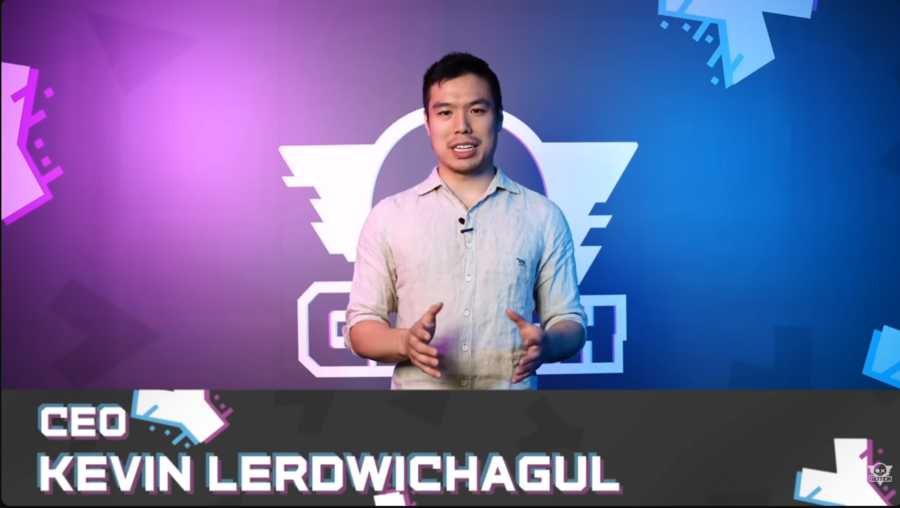
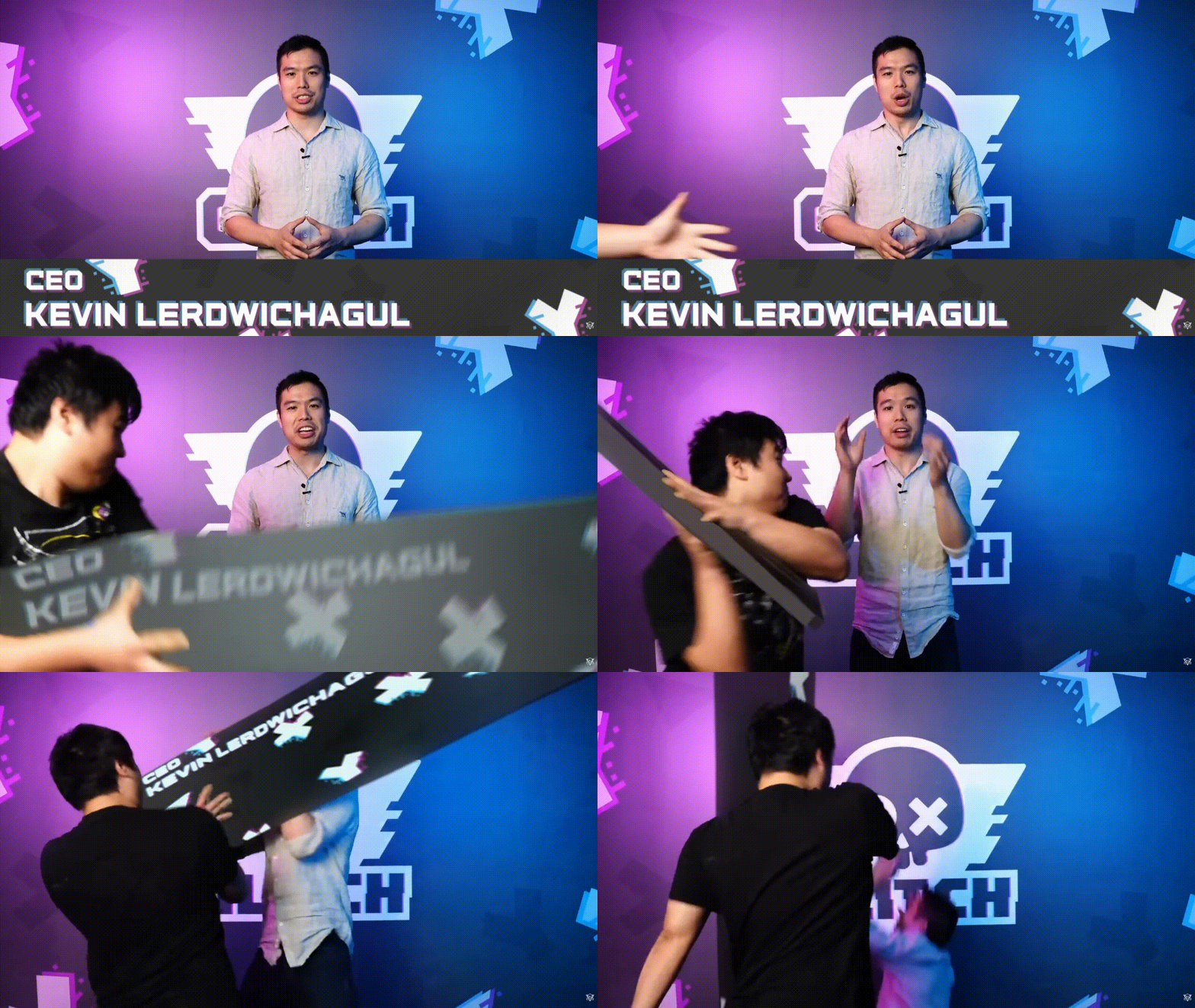
Video from Youtube* GLITCH: «WELCOME TO GLITCH»
An important feature of Glitch’s communication is that the founders do not treat the audience as an external group of consumers. Kevin and Luke position themselves as part of the audience rather than outside observers have repeatedly emphasized that the studio emerged from dissatisfaction with the state of the contemporary Western animation industry. In their view, the market focuses either on children’s content or adult animation, while teenage and young adult animation remains underrepresented. There is a perceived gap in the animation market for teenage and young adult audiences They discuss this problem not only as entrepreneurs, but also as viewers who themselves lacked such stories.
In fact, Glitch’s communication is built around the idea that the studio creates projects its founders would want to watch themselves. This distinguishes the brand from the model of «we studied the audience and understood what it wants.» Glitch takes a different position: «we belong to this audience ourselves». Because of this, the relationship between the brand and its fans appears more equal. The communication model is based on identification with the audience rather than external analysis
Mutuality is also expressed in the choice of creators. Glitch collaborates with independent creators who already have their own style and fan base. This happened with Liam Vickers, the creator of Murder Drones; Gooseworx, the creator of The Amazing Digital Circus; and Dana Terrace, connected with Knights of Guinevere. In these cases, the studio positions itself not as a structure that dictates creative decisions, but as a platform that helps creators realize ideas that are difficult to produce within the traditional industry model.
The attitude toward fans is also built through recognition of their contribution. In public messages, studio representatives talk not only about views and commercial results, but also about fan art, cosplay, discussions, theories, and other forms of audience participation. Kevin’s message after the theatrical screenings of the final episode of The Amazing Digital Circus is especially revealing: he thanks fans not only for supporting the release, but also for turning the event into part of community life. In this type of communication, the audience is perceived not as statistics, but as a co-creator of the project’s public success.
Thus, the principle of mutuality in the communication of Glitch Productions is expressed through the deliberate reduction of distance between the brand, creators, and audience. The studio positions itself not as an external corporation, but as part of the same cultural space as its fans. Communication is built not on the relationship of «producer — consumer, ” but on interaction within a shared community united by an interest in independent animation.
Propinquity
According to Dialogic Theory, propinquity means the organization’s willingness to participate in communication as it occurs, rather than only at pre-planned moments. For Glitch Productions, this principle is especially important because of the specifics of animation production. Producing episodes takes a long time, and according to Kevin Lerdwichagul, one episode of Murder Drones can cost between 200,000 and 300,000 US dollars. Therefore, the studio cannot maintain audience interest only through new releases.
1. GLITCH’s reaction to fanart 2. Gooseworx posts X/Twitter*
Under these conditions, communication between episodes becomes part of Glitch’s main strategy. The studio uses YouTube Shorts*, TikTok, X/Twitter*, Instagram*, Reddit, Discord, Glitch Inn, behind-the-scenes materials, memes, audience questions, and creators’ personal accounts to maintain constant contact with fans. This content does not replace the episodes, but makes the project feel alive during waiting periods.
Propinquity is most clearly visible in Gooseworx’s communication, the showrunner of The Amazing Digital Circus. Unlike the traditional model, where creators interact with audiences mainly through finished works or official interviews,
Gooseworx regularly participates in the everyday life of the fandom. Her posts often do not look like official promotional messages, but rather like remarks from an ordinary member of the community.
For example, after the official plush toys of the characters went on sale, she wrote: «Everyone’s getting their Pomni and Jax plushes before me.» In terms of content, this post does not provide new information about the series and does not perform a direct promotional function. It works differently: the creator shares with fans the current experience of waiting for merchandise and shows her own involvement in what is happening inside the community.
Another example is her post: «Seeing fanart that’s really really close to something that happens in canon later.» Here, she reacts to fan creativity and theories in real time, creating a cycle of interaction: fans analyze the series and create content, the creator responds, and this response generates further discussion.
Propinquity is also expressed through AMAs. In the Sunset Paradise AMA, GLITCH invited fans to ask Luke and Kevin questions. TheRealSMG4 answered viewers, discussed a possible second season, reacted to fan ideas, and admitted that some suggestions could be considered. In the Murder Drones AMA, Liam Vickers answered questions about lore, drone mechanics, regeneration, and worldbuilding.
Thus, Glitch realizes propinquity through the constant presence of the studio and creators in ongoing fan conversations. Communication is not limited to official releases: between episodes, waiting becomes a period of active discussion, interpretation, and fan creativity, which helps preserve audience engagement.
Empathy
Within Dialogic Theory, empathy means the brand’s ability to understand the interests, emotions, and expectations of the audience. It is important that empathy here is not limited to a friendly tone or the use of memes. It is expressed in how well the brand understands what is important to its community: what kinds of stories viewers want to see, what kind of attitude they expect toward themselves, and what forms of participation they consider valuable.