Rubricator
- Introduction
- Communication Channels
- Theoretical Framework
- Analysis
- Conclusion & Recommendations
- List of literature and sources of images
1. Introduction
Dodo Pizza is a global pizza delivery brand built around one main idea: pizza is not the center of the experience — people are.
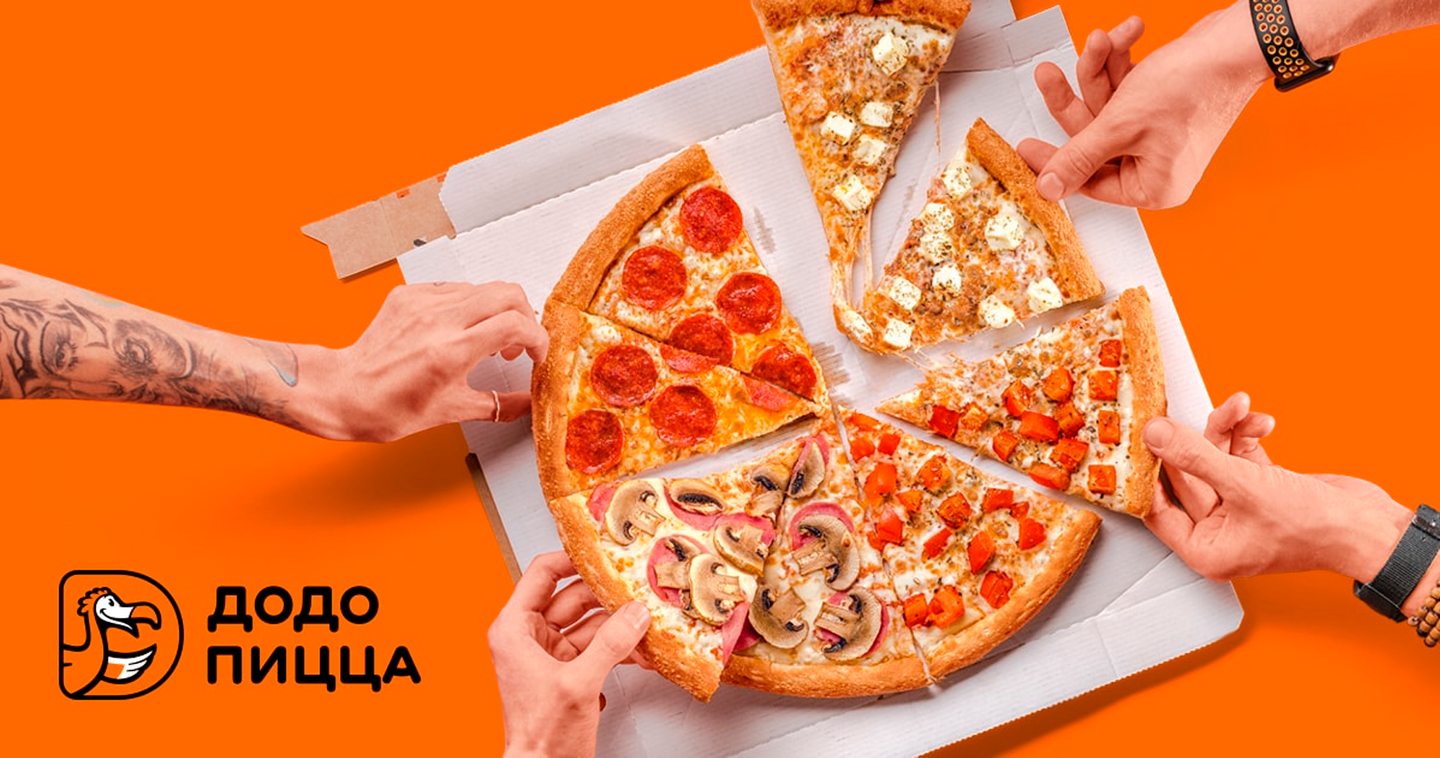
Promotional website banner.
The company defines itself through five core values: accessibility, responsiveness, trust, openness, and quality. These values shape every part of the brand’s communication, from visual identity to customer service and social media tone. Unlike many fast-food brands that place the product on a pedestal, Dodo Pizza focuses on everyday human experiences. The brand believes customers return not only because of the food itself, but because of the comfort, convenience, and emotional connection surrounding it. Their communication therefore highlights real-life moments, relationships, and emotions instead of idealized product advertising.

Pizza boxes released in 2024. Illustrated by Anna Evdokimova.
The slogan divides the brand communication into two dimensions: Functionality — Dodo guarantees quality ingredients, fast delivery, and a smooth customer experience. Emotion — the brand positions itself as supportive, warm, and attentive, almost like a reliable friend present in people’s daily lives.
«We’ll take care of the pizza while you take care of what matters».
The target audience is broad, but the communication strategy adapts to different life situations rather than strict demographic groups. Dodo focuses on moments: eating alone after work, sharing food with friends, or gathering with family. This human-centered positioning makes the brand feel approachable and relatable.
2. Communication Channels
2.1. Physical and Digital Advertising
The brand actively communicates through social media platforms and online advertising banners on platforms such as Yandex and Google, as well as physical banners on buildings and bus stops. Their media communication is intentionally short, clear, and visually engaging, allowing users to instantly understand the message.
2.2. Partnerships and Collaborations
Dodo carefully selects partnerships that reflect the brand’s values and fit naturally into everyday culture. Rather than simply placing logos together, collaborations are integrated into storytelling worlds that audiences already recognize.
Screenshots of a Dodo Pizza mini-game in Yandex.maps app.
When Dodo Pizza approached Yandex with an incentive to collaborate, an interesting decision was made. By utilizing Yandex.maps service, a pizzeria icon was placed all around the cities of Russia. Clicking on it opens the game, which features an interactive city with 10 hidden items, all of which can be ordered from Dodo. Players must find all 10 items to win a prize.
Advertisement banner for Cyberpunk 2077 collaboration demonstarting a themed pizza box and a stickerpack.
As for more hands-on collaborations, futuristic campaigns inspired by cyberpunk aesthetics presented Dodo as part of the «pizza experience of the future». This reinforces their goal of creating a more demanding, proactive audience. The campaign did so well, in fact, people started reselling empty cyberpunk boxes.
Listings for Cyberpunk 2077 themed pizza boxes on Avito.ru.
For collaboration for the release of Denis Villeneuve’s 2021 film, not only did Dodo Pizza come up with a special combo in a themed box and a stickerpack, but also changed the design of the product card in their app. Unlike all other cards, the Dune combo had a desert background with a parallax effect, which instantly caught the eye of the customers.
Dune (2021) themed pizza box and stickerpack / Announcement for a giveaway in Omsk location.
Animated card with parallax effect in Dodo pizza’s app for Dune collaboration.
2.3. Direct Communication with Customers
Customer interaction is one of Dodo Pizza’s strongest communication tools. The brand avoids excessive slang or artificial friendliness, adapting its tone depending on the customer’s mood and communication style. If a customer is formal, the brand responds formally; if the customer jokes, the brand may respond humorously. This flexible conversational style creates the impression of genuine dialogue rather than scripted customer service, supporting the company’s people-centered identity.
3. Theoretical Framework
3.1. Elaboration Likelihood Model (ELM)
The Elaboration Likelihood Model, brought up by Richard E. Petty and John Cacioppo, is a dual-process theory explaining how messages are able to change attitudes through two routes: Central route — audiences carefully analyze detailed information and arguments. Peripheral route — audiences rely on emotional cues, visuals, colors, or atmosphere rather than deep analysis. This theory is useful for analyzing Dodo Pizza because the brand combines rational messages about convenience and quality with emotional storytelling and visual symbolism.
3.2. The Excellence Theory
The Excellence Theory is a widely recognized framework in public relations developed by James E. Grunig. The core idea is that effective PR builds mutually beneficial, long-term relationships with stakeholders through two-way, symmetrical communication. It posits that ethical, strategic, and balanced communication is crucial for organizational success. This framework is particularly relevant to Dodo Pizza’s customer service style, personalized replies, and interactive social media communication.