Communication theory in the field of design
Contemporary design is a fundamental act of communication, where every visual element functions as a symbol within a complex semiotic system. According to the constitutive approach, communication is not a channel for transmitting pre-packaged meanings, but a process of co-creating significance. Within this paradigm, design becomes a strategic tool capable not merely of attracting attention, but of actively shaping social reality, relationships, and shared identity.
This strategic role of design is realized through three interconnected principles. First, design operates as a vehicle for storytelling, embodying Walter Fisher’s narrative paradigm. Through form, colour, composition, and typography, it encodes narratives that the audience decodes according to their cultural context. Second, the designer navigates the balance between strategic agency and structural constraints, utilising both substantive arguments and aesthetic signals, while always acknowledging that the chosen medium—be it a physical object or a digital interface—inherently dictates the conditions of perception. Third, design evolves from functional persuasion to critical reflection: it not only creates user-friendly interfaces and manages audience relationships through dialogue but is also capable of challenging dominant cultural norms.
Thus, in the contemporary understanding, design is a powerful mediator of relationships that shapes new social practices and rituals. It transforms practice from the mere creation of objects into the conscious design of how meaning is generated, shared, and contested in the world.
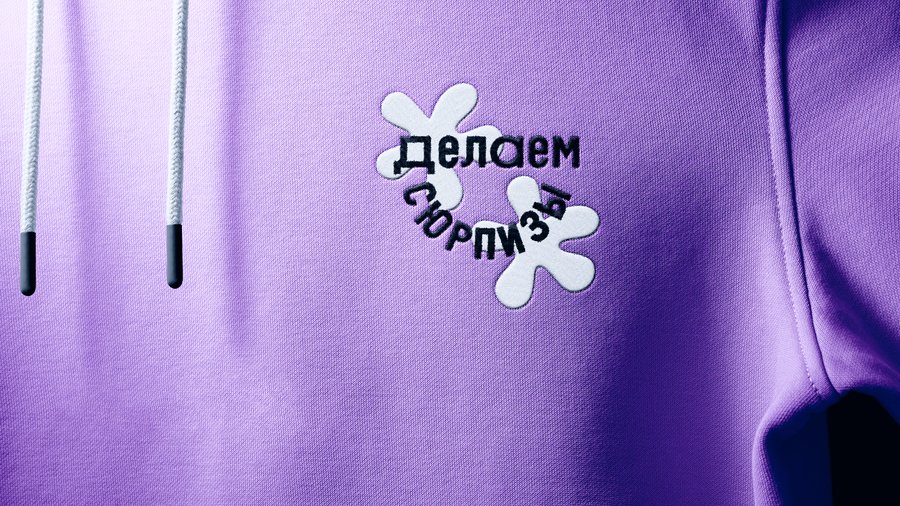
For the «Making Surprises» brand, this means a fundamental shift in positioning: we are not just designing a gift delivery service, but a new form of social interaction. Our product—the gift box—functions as a materialized communicative act that redefines the established ritual of gift-giving, transforming it from a source of stress and uncertainty into a source of joy and confidence.
The semiotic tradition, which views communication as the exchange of signs within culturally conditioned systems, holds a central place in our strategy. Every element of the «Making Surprises» identity is a carefully designed sign carrying specific meaning:
Mascot «Bompochka» (The Little Bomb) — an iconic sign visualizing the brand’s core value: an explosion of positive emotions, spontaneous joy, and the energy of surprise.
Graphic symbols «?» and «!" — indexical signs marking the consumer’s journey: from the question («What should I give?») to the emotional resolution («Wow!»).
«Blot» in the identity — a symbolic sign of creative chaos and unpredictability, deliberately contrasted with the dull, clichéd aesthetics of traditional gifts.
These signs form a coherent semiotic system that re-codes the gift category: we move away from signs of predictability, formality, and passive consumption («bought at the last minute») towards signs of intrigue, emotional engagement, and joint action («a story experienced together»).
Our color system functions as a tool for managing attention and emotion. The Core of Energy. The contrast of acid lime and deep purple creates visual tension and dynamism, acting as a powerful peripheral cue to capture attention in the digital noise. It is a semiotic sign of explosion and bold creativity.The light, pastel gamut serves a different function, evoking associations with tenderness, care, and quality. It is used for the design of the physical packaging, creating a sense of premium feel and balancing the explosive energy of the first palette. Integration into the Ecosystem: From Digital Trigger to Physical Ritual. This dual system is a practical application of the media ecology approach. In the digital environment, Palette 1 dominates to attract attention. At the moment of tactile contact (packaging), Palette 2 comes to the fore to materialize care. Thus, the visual system is a flexible communication interface that encodes different phases of the user journey.
Our approach also relies on the sociocultural tradition and Anthony Giddens' Theory of Structuration. We analyze the gift-giving ritual not as a set of individual actions, but as a social practice reproduced within certain structures (rules, norms, resources).
- Existing structure: The ritual implies that the giver must independently spend time, be creative, guess desires, wrap, and present the gift. This creates high levels of stress and risk («I won’t guess right,» «they won’t like it»).
- Our agency as a brand: «Making Surprises» acts as an agent of change, using existing rules but filling them with new content. We offer a new structure — a system of ready-made thematic boxes with preserved intrigue.
- New practice: The user (agent) receives a simplified script that relieves them of the burden of choice but preserves and even enhances their agency in the sphere of emotional gesture. The ritual is reproduced, but its meaning and emotional coloring are transformed: from a test of attentiveness, it becomes a guaranteed act of joy.
Thus, communication theory provides «Making Surprises» not with a set of abstract terms, but with a practical toolkit for designing a meaningful brand that actively shapes new, more positive social practices.
PRESENTATION FOR A GENERAL AUDIENCE
Do you recognize that feeling of inner panic when a friend’s birthday, an anniversary, or any other occasion for a gift approaches on the calendar? Time slips through your fingers, ideas run dry, and standard solutions in stores seem impersonal and insincere. We live in a world where attention is valued, but we constantly lack the most precious resource to show it—time.
At «Making Surprises,» we believe that giving joy should be easy, pleasant, and stress-free. What if the perfect gift wasn’t something you had to search for, but could simply… receive ready-made, while preserving the most valuable part—the magic of surprise?
«Making Surprises» is a service that takes on all the hard work of creating the perfect gift, leaving you only the best part: choosing the mood and the moment of presentation.
Our Solution: A Ready Surprise, Not Just a Box
How it works —simply and magically:
- You choose an emotion, not an item. Three box lines: «BOOM» (for explosive fun and bright impressions), «MEGA-BOOM» (a balanced mix of useful and pleasant), «SUPER-BOOM» (a truly luxurious and memorable experience).
- You know the theme but keep the intrigue. You see the general direction (e.g., «For Creative Inspiration» or «For the Perfect Evening»), but the exact contents remain a surprise until the very moment of unboxing. This is the key element of play and anticipation.
- You receive a ready-made performance. Each box is a carefully curated collection of high-quality, unique, and useful items, packaged with impeccable care. A stylish card is already included. All you have to do is hand it over and enjoy the reaction.
Who is it for? For everyone who has ever said or thought:
«I have absolutely no time to look for anything.»
«I don’t have a single idea of what they might like.»
«I’m afraid of making a mistake and giving a useless gift.»
«I want to give not just a thing, but an emotion.»
Our mission is to return the gift-giving ritual to its original meaning: to strengthen connections, give positive emotions, and create shared memories, freeing this process from stress and uncertainty.
PRESENTATION FOR A PROFESSIONAL AUDIENCE
Thesis: From Product to Communication Platform