How communication theory works in the field of design
In the field of design, communication theory works as a framework that helps to explain how visual messages are created, transmitted, and interpreted by audience. Design is not only about aesthetics. It is a strategic process in which every visual element, such as color, shape, typography and composition, works as a sign that carries meaning. Communication theory clarifies how these signs influence perception, shape attitudes, and guide user behavior.
In design, communication becomes a structured process where images, symbols, and forms work together to construct meaning for the audience.
The interaction between the sender (the brand), the message (the visual design), and the receiver (the audience) becomes especially important in contemporary branding, where visuals often serve as the primary language of communication. Theories such as semiotics, framing and agenda-setting help designers understand how audiences process images and how cultural context shapes interpretation.
By applying communication theory, design becomes not just the creation of visuals but the construction of meaningful experiences that connect the brand with its audience in a clear, intentional, and emotionally resonant way.
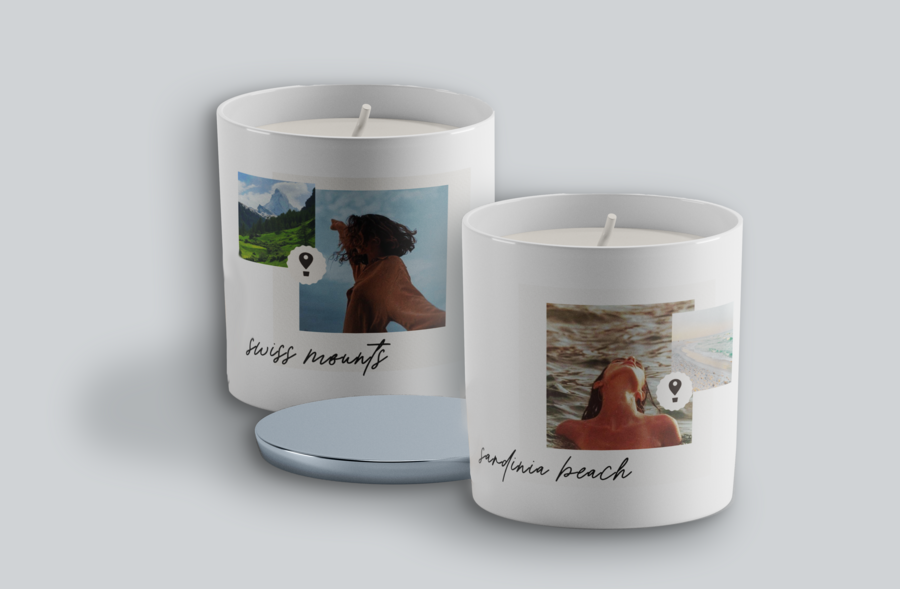
For this project our team uses the brand Gate. This brand was created as a student’s project 3 years ago. Gate is a brand of scented candles, diffusers, and aroma objects. Each product embodies a special location (Bali, Paris, Tokyo, Marrakech) not as a geography, but as a cultural meaning. The goal of the brand is not to represent these places literally, but to communicate their atmospheres, emotions, and identities. Each aroma product is accompanied by the audio materials which help to dive into the atmosphere of the specific place.
Communication theory provides a lens for understanding how design can encode and transmit meaning. As Lecture 1.2 states, theory allows us to «see the world through certain lenses» and structure our interpretation of reality.
In the case of Gate, three traditions are especially relevant:
1. Semiotic tradition — scent and visuals function as signs that produce meaning. 2. Socio-cultural tradition — places are socially constructed through shared cultural practices, memories, and narratives. 3. Rhetorical tradition — the brand persuades, invites, and guides the audience through storytelling.
Presentation for a general audience
Gate — a sensory journey that speaks to you
Gate is a brand of homemade fragrances complemented by specially created music for aromatic journeys. Fragrance and music complement each other and refer to certain places and situations — they immerse you in a journey from home with the help of the smells and sounds.
Our mission is to make travel possible not through movement, but through experience.
We believe that the strongest memories are created not by words, but by sensory impressions. A familiar scent can instantly transport us to another country, another time, another version of ourselves. Music can deepen that feeling, shape mood, rhythm, and emotion.
Each Gate product is more than a fragrance. It is a carefully composed sensory journey, where scent and specially created music work together to evoke a specific place, atmosphere, or emotional state. Lighting a candle or diffusing a fragrance becomes a ritual — a moment of pause, presence, and inner travel.
Our fragrances help turn a home into a personal space of calm, inspiration, and imagination. They allow you to slow down, reconnect with yourself, and enjoy the present moment. Gate products also make memorable gifts. They are not just objects, but experiences — personal, emotional, and open to interpretation.
With Gate, your home becomes a gateway. A gateway to memories, dreams, and journeys that live inside you.
Presentation for a professional audience
Brand Concept
Gate is an imaginary sensory brand specializing in scented candles, aroma diffusers, and fragrance-based objects. The brand is built on the idea that scent functions as a communicative medium capable of transmitting cultural meaning, emotional atmosphere, and spatial identity. Each Gate product represents a specific location not as a literal place, but as a culturally encoded experience translated into fragrance.
Fragrance Design Approach
All scents are developed as compositional narratives, similar to perfumery structures. Each location-based product follows a layered system:
— Top notes establish the initial emotional impression of the place — Heart notes express its cultural and social character — Base notes create a lasting atmospheric foundation
For example: — Bali emphasizes warm resins, vegetal notes, and soft woods to communicate ritual, slowness, and groundedness. — Paris relies on powdery florals, subtle leather, and mineral accords to evoke intimacy, elegance, and urban romance.
Mission and brand values
The mission of the brand is to enable immersive emotional journeys from home by creating meaningful sensory communication through fragrance and sound.
About brand values:
— Comfort and sensuality — Curiosity and openness to new experiences — Appreciation of the present moment — Emotional authenticity
Brand Personality
Gate’s brand character is emotional, sensitive, open, and freedom-loving. It combines three core archetypes:
— Explorer: curiosity, discovery, travel, new impressions — Lover: sensuality, comfort, intimacy, care for home — Magician: transformation, escape, immersion, emotional shift
Together, these archetypes reinforce Gate’s promise of the inner travel and transformation.
Consumer Benefits
Rational benefits:
— Integrated product experience (fragrance + music) — Wide range of thematic compositions
Emotional benefits:
— Sense of presence in another place — Deep personal emotional engagement — Creation of a calming, cozy, and meaningful home atmosphere
Target audience and market insight & positioning